







Digital marketing for a service business is not a stack of channels. It is a system that catches demand when a buyer already needs a GC, pool builder, roofer, HVAC tech, plumber, electrician, or landscaper, then turns that click into a booked job. The operators who grow from $1M to $10M run four things well: intent capture, conversion, trust, and measurement. Everything else is optional.
What the stack actually includes
- 01 Discovery: search, Maps, a paid ad, a directory, or an answer engine.
- 02 Evaluation: services, towns, reviews, photos, licenses, warranties, project proof.
- 03 Contact: call, form, chat, or text.
- 04 Qualification: job type, location, urgency, budget fit, schedule.
- 05 Booking and sale: appointment, estimate, close.
- 06 Revenue and retention: completed work, payment, maintenance, referral.
A list of tactics can produce traffic. A system moves someone from emergency plumber near me to a qualified call, a scheduled visit, a sold job, and a review. HVAC shops that rank well still lose the nights they do not answer. Roofers who buy leads still lose the jobs nobody follows up. Tree services still burn budget on ZIP codes they will not drive.
Start with job economics, then pick channels
Write this down for each service you want more of: towns you will drive, average ticket, gross profit after labor and materials, lead-to-appointment rate, appointment-to-sold rate, monthly crew capacity, and a maximum cost per booked job.
A plumbing company with an $1,800 average ticket, 45 percent gross margin (about $810), a 50 percent close from qualified appointments, and a rule that acquisition can take 30 percent of gross profit has a $243 ceiling per booked job. That is a test ceiling, not a guarantee, because overhead, warranty, and discounts may require a lower number. High-ticket work, meaning pools, kitchen and bath, roofing replacements, and outdoor living, can support a higher acquisition cost and a longer sales cycle. Emergency drain calls cannot. Do not run one blended target across both.
"Home services digital marketing is the channel stack: Map Pack, paid search, a fast site, reviews, and call tracking. The stage-by-stage order lives on a separate post."
The four drivers that pay crews
Intent capture means you show up in the Map Pack and in paid search at the moment of need. Conversion means the page loads under two seconds, the number is tappable, and someone answers live. Trust means review depth and a response on every review. Measurement means one tracking system and a cost per booked job by channel. Businesses strong on all four grow on the same budget that weak ones waste.
- ·Intent: Top-3 Map Pack coverage plus paid search on emergency and replacement terms
- ·Conversion: pages that load under two seconds, three-field forms, five-minute response
- ·Trust: steady review velocity, every review answered
- ·Measurement: graded calls and cost per booked job, monthly
Channel mix by trade
The four drivers are universal. Where the money goes is not. A few patterns that hold in Florida:
- ·HVAC: Maps and call-only ads for AC repair tonight. Replacement pages and financing for planned changeouts. Seasonal bid changes in heat and after storms.
- ·Plumbing: emergency terms need a human on the phone. Planned water heaters and repipes need pages with price ranges and process.
- ·Roofing: storm searches spike, and insurance and storm-chaser noise is high. Photos, license numbers, and estimate follow-up close more than a cheap click.
- ·Electrical: panel upgrades and EV chargers are compared before the call. Educational pages plus ads on high-intent terms.
- ·GC, kitchens, baths, cabinets: longer consideration. Reviews, project galleries, and remarketing after a site visit.
- ·Pools, decks, landscape, outdoor living: seasonal. Protect winter with SEO and brand, and spend into the selling season with ads.
- ·Tree: separate emergency takedown from pruning, and treat radius targeting as more important than copy.
Electrical is the clearest split in that list. A homeowner comparing a panel upgrade reads the service page before calling, so the page has to show the permit, how long the power is off, and photos of the panel.
Channels that catch demand
Local SEO and Google Business Profile
The Map Pack is the highest-intent real estate on Google for trades. Optimize the Google Business Profile (still called GMB in some old docs; the product is Google Business Profile), keep categories honest, post real job photos, and track rank on a geogrid. why local SEO matters covers the economics. Apple Maps belongs as an Apple Business Connect citation, not as a paid ads line item. Yelp belongs as a review and citation directory.
Google Ads and Local Services Ads
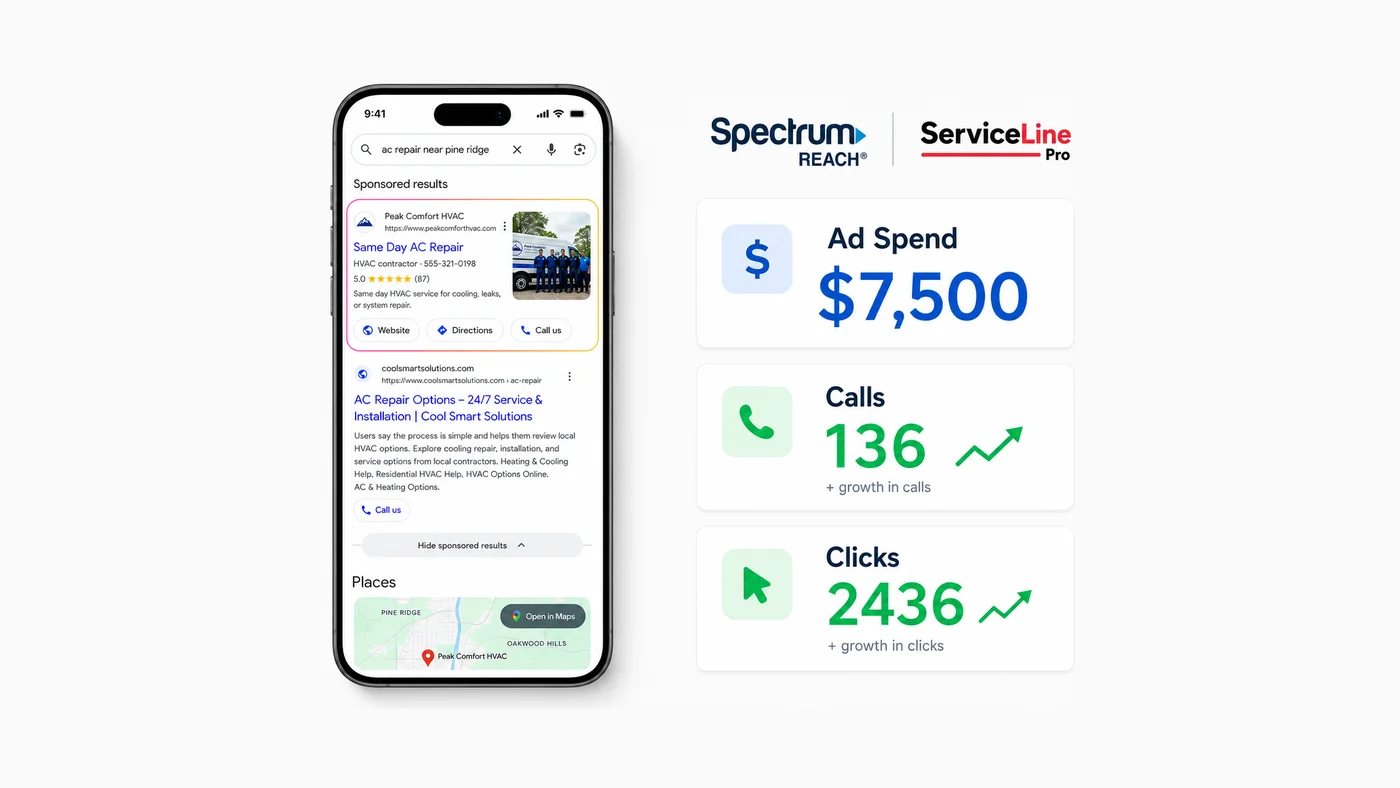
Paid search buys the week while SEO compounds. Typical spend in a competitive metro sits around $5,000 per month. In our accounts, leads often show inside the first week when tracking and landing pages are right. Local Services Ads sit above everything with a Google Verified badge and charge per lead. Run both when budget allows. ServiceLine Pro manages Google Ads at $0 agency fee because Spectrum pays us.
Website
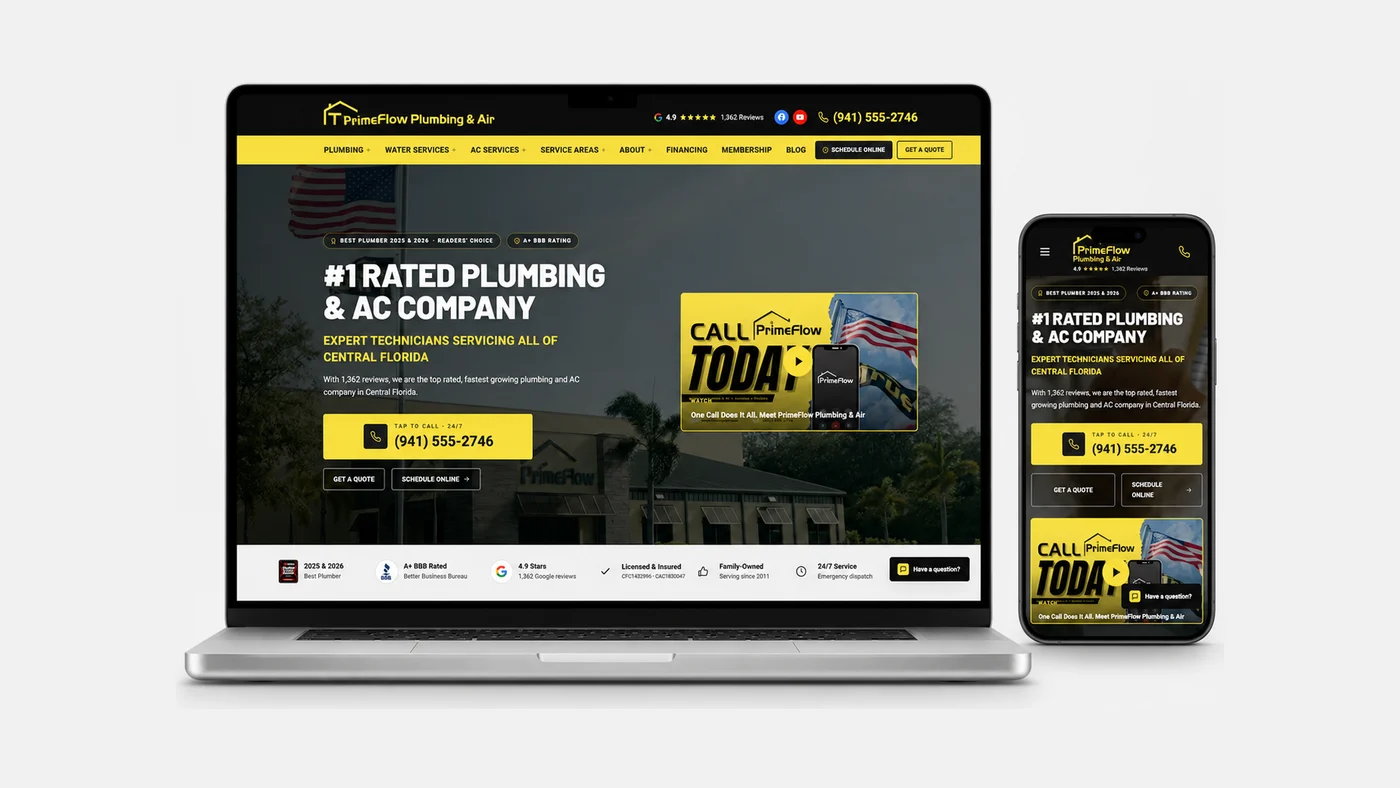
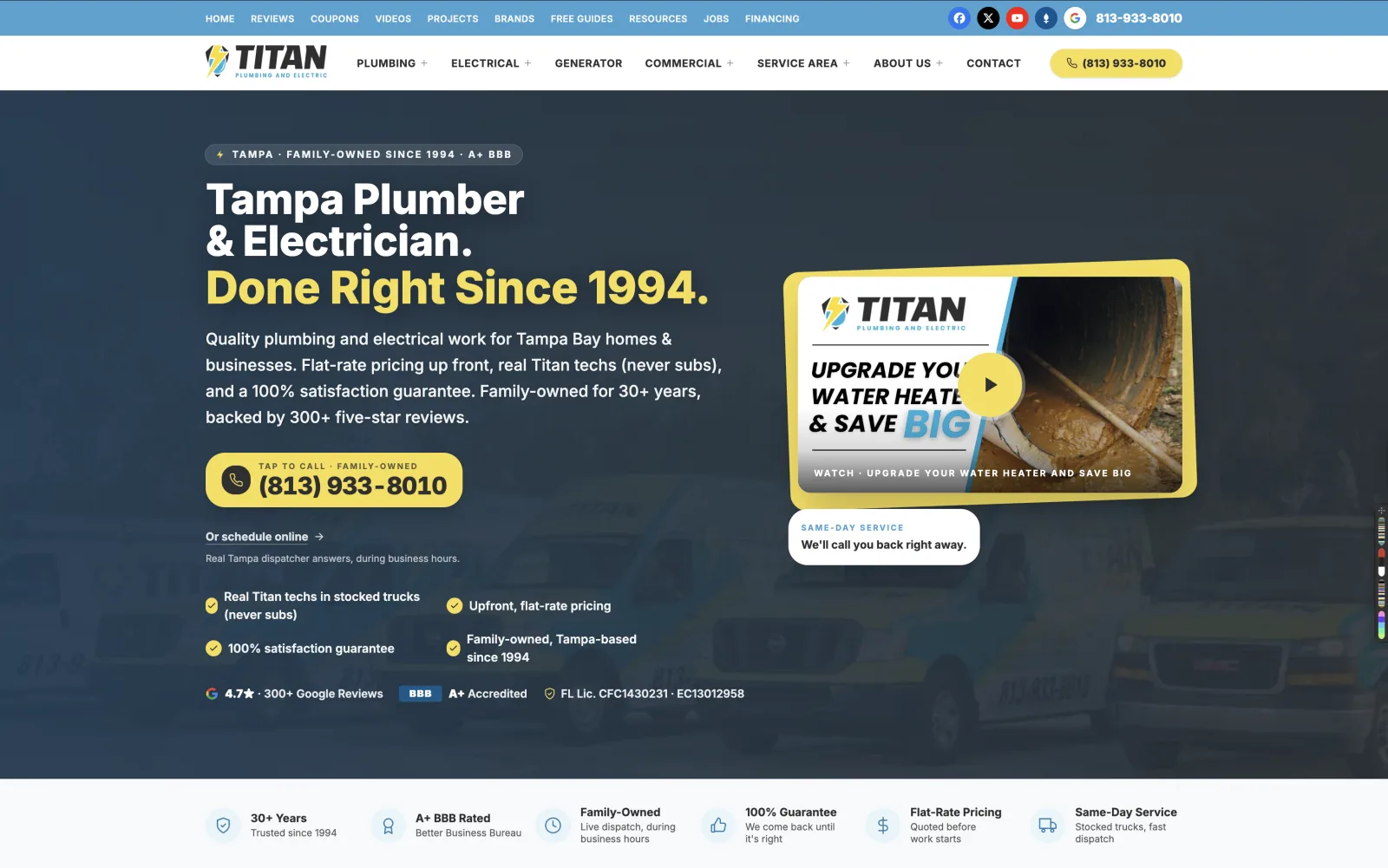
A slow page builder site leaks the clicks you paid for. Performance websites go live in 30 days, $4,500 once or $449 per month for 12 months, load under two seconds, and you own the files.
Reviews, email, and paid social
Reviews feed Map Pack rank and close rate. Email and SMS turn past customers into repeat and referral work for almost nothing. Paid social exists as a brand and remarketing layer after search is working. It is a poor first channel for emergency trades. Streaming TV (OTT/CTV) is branding, typically $5,000 per month and up. Nobody calls from the spot.
How to pick channels
- ·Service area size: one city or a whole metro. Broader areas need more budget and more city pages.
- ·Job type: emergency AC and burst pipes need instant visibility. Remodels, cabinets, and outdoor living reward reputation and content over months.
- ·Budget you can sustain for 90 days. PPC is fast and expensive, SEO compounds, and both need a full quarter before you judge them.
- ·Season: Florida HVAC peaks in summer, roofing spikes after storms, and plumbers see freeze events. Build the seasonal multiplier in before launch.
- ·Competition: search your top services from an incognito phone in your service area. That snapshot of who owns the Map Pack beats a slide deck.
Rank the channels by booked jobs, not by how often agencies teach them. In order of what fills a Florida board: the Map Pack, Google Ads on emergency and replacement terms, LSAs after verification, a site that loads under two seconds, review velocity, email and SMS to past customers, and streaming TV only after search is funded.
Performance pricing, used honestly
An exclusive-call vendor charges per qualified call: decision maker, business hours, real interest, contact captured. That is a fill-the-board product, not a replacement for owned rankings. SEO remains the cheapest call once you hold the Map Pack.
What invest means in dollars
A working Florida stack is not a $300 per month we-post-for-you retainer. SEO at $3,000 per month, ads around $5,000 in a competitive metro, and a site that can convert is the published range for companies trying to win Maps and search. Smaller towns can spend less on ads and still need the profile, the site, and the phone.
The website is the conversion layer. A $5,000 ad budget pointed at a five-second theme is an investment in your competitor. Mailers and radio can support brand, but you cannot pause a mailer when you are booked, and you cannot see which ZIP produced the call. Digital lets you cut a losing service, raise a winning town, and staff the phones to match the auction.
Mistakes that stall growth
- ·Spreading a thin budget across five channels. Master two first: Map Pack and paid search.
- ·Buying shared leads as a growth plan. They compress margins by design.
- ·Judging channels on traffic. Only booked jobs count.
- ·Letting an agency own your website and ad accounts.
- ·Stopping marketing in busy season. The pipeline cools a season later.
Fix response before you buy more traffic
Speed-to-lead is an operations number. Answer live during business hours. Return missed qualified calls in minutes, not after lunch. After hours, a text-back offering the next open slot beats a voicemail box. Track missed calls by hour and source. If you miss 30 percent of marketing calls, you are buying waste.
Carry the source from the first click through the CRM to the closed job. Without that, every channel claims the same revenue.
What to skip in the first 90 days
- ·Paid social as the first spend for emergency HVAC or plumbing. Those buyers are on Google, not in a feed.
- ·Apple Maps ads. Apple Business Connect as a citation is enough. Apple sells Maps ads in the US and Canada, but we do not recommend them for home services.
- ·Yelp ads as a primary lead offer. Keep Yelp as a review and citation listing.
- ·A blog quota with no service pages and no profile work.
ServiceLine Pro runs the system with published pricing and client-owned assets: Local SEO, zero-fee Google Ads, and websites that load under two seconds. Start with the $1,000 Growth Audit or book a strategy call at (813) 328-6341.
Which channel should you fund next?
If the owner still answers every call, start with a claimed Google Business Profile, a phone number customers can tap and a way to see which calls become jobs. Test Google Ads on one service your crew can take on this week.
When you have crews to keep busy, give each core service a page and put someone in charge of missed calls. Compare booked jobs by service and town before increasing spend.
Once several estimators cover different territories, track completed revenue and close rates by source. A campaign that fills one crew’s calendar may send another crew jobs outside its service area.
When to combine channels
Combine on a schedule. Start where intent is highest, add review generation immediately because stars raise every future channel, then layer brand and remarketing after search is saturated. Email and SMS come last and cost least.
- ·Phase 1: Map Pack, paid search, reviews.
- ·Phase 2: LSAs and Bing. Turn proven keywords into SEO pages.
- ·Phase 3: remarketing and, if budget allows, streaming TV for brand.
- ·Phase 4: email and SMS on the customer base.
A 90-day sequence on top of that: month one is tracking, the profile, phone coverage, and the three service pages that produce the most profit. Month two is ads on those services, the review process, and an estimate follow-up script. Month three is cutting losers, raising winners, and deciding whether AI SEO or ChatGPT Ads belong in the next quarter.
Home services SEO is a different page
This post is the channel stack for home services digital marketing. The Map Pack, one URL per trade, and the published price live on home services SEO. Florida demand stays on home services SEO. The campaign page is local SEO campaigns.
The Map Pack half follows Google's published factors: relevance, distance, and popularity. The page is Tips to improve your local ranking on Google. Google also says there is no way to request or pay for a better local ranking.
Nothing is set-and-forget
Ad auctions reprice weekly. Competitors copy offers. Google reshuffles the Map Pack. Last year's landing page quietly stops converting. Treat marketing like fleet maintenance: scheduled checks and small constant corrections. One disciplined hour a week beats a quarterly panic.
You need Search Console, a call-tracking account you own, and Google Ads access. You do not need a wall of vanity dashboards. If a vendor will not give you admin, you do not have an investment. You have a dependency.
The channels have their own pages: lead generation strategies, the marketing checklist, best marketing for contractors, and marketing terms. Running the site day to day is business website management.
Frequently Asked Questions
What digital marketing should a service business start with?
Google Business Profile plus paid search on the jobs you want this week. Add local SEO as a 90-day Map Pack campaign. Layer reviews, email, and brand channels after those two produce tracked calls.
How much should a contractor budget?
SEO campaigns at ServiceLine Pro are $3,000 per month. Google Ads typically sit around $5,000 per month in a competitive metro at $0 agency fee. Websites are $4,500 once or $449 per month for 12 months.
How do I know digital marketing is working?
Cost per booked job by channel, reviewed monthly. Traffic, likes, and impressions stay in the appendix.
Get a real diagnosis of your business.
A seven-layer review of your SEO, Google Ads, website, and Map Pack presence, delivered as a written report within 72 hours. It's $1,000 and it always credits toward any work you do with us. If we don't find $100,000 in missed revenue, we refund it.
Get the Growth Audit