







Owners throw a small budget at Google, get tire-kicker clicks, and call paid search a scam. The platform is rarely the problem. Setup, structure, and unanswered phones are. This is the build guide: what must exist before you spend, how to structure the first HVAC account, and how to tune it weekly. Seasonal bidding and LSA vs Search are covered further down. The click-by-click launch checklist is in the build steps below.
What must be live before the first click
Launching without tracking is how you burn 30 days. Confirm tags with Google’s Tag Assistant. If you cannot measure a call, you cannot improve cost per booked job.
- ·Google Ads linked to GA4 and your Google Business Profile.
- ·Conversion actions for calls, forms, and bookings you can verify.
- ·Call tracking (CallRail or equal) with unique numbers per campaign.
- ·HVAC landing pages per advertised service, load under two seconds.
- ·Keyword list for high-intent local phrases, not “HVAC tips.”
- ·A daily budget sized to local CPC, not a round number that feels cheap.
Keyword Planner for volume and CPC in your cities. “AC repair near me” and “emergency furnace replacement” buy intent. Blog-topic terms buy students and DIYers.
Step 1: service area and the jobs you want
Write the cities and ZIPs your trucks cover on a normal week, plus the ones you will not take. Then write the jobs you want the campaign to buy: emergency AC repair, furnace repair, replacement, memberships. Do not start with age ranges and home-improvement interest. Search intent beats demographic targeting for HVAC.
"HVAC Google Ads setup: tracking first, campaigns split by service and urgency, exact and phrase keywords, negatives, call-only for emergencies, and weekly search-term cleanup."
- ·Property types you actually serve: single-family, light commercial.
- ·Ticket mix: repair versus replace. Separate them in the account later.
- ·Season: what you will advertise this month and what you will pause.
Set the goal as booked jobs, not 30 percent more leads. Work out a cost-per-booked-job ceiling from your average repair and replacement tickets, and size the monthly media budget to the cost per click and the number of clicks you need to learn. Call tracking and recordings belong in that budget, not in a later phase.
Structure: one campaign per major service
One campaign with every HVAC service dumped in it hides winners and losers. Split AC repair, heating repair, new installs, and maintenance. Inside each, split emergency intent from scheduled intent.
Someone searching “AC not working” at 10 p.m. needs a call-only ad and a number you answer. Someone searching “annual HVAC tune-up” needs a page with pricing context and reviews.
- 01 One campaign per major service.
- 02 Ad groups by urgency: emergency vs scheduled.
- 03 Tight themes: one keyword family per ad group (repair, not every synonym in one bucket).
- 04 Three responsive search ads per ad group.
- 05 Location targeting to cities you dispatch. Exclude the rest.
- 06 Ad schedule to hours you staff, plus a true after-hours plan if you sell 24/7.
Single Keyword Ad Groups are optional control, not a religion. Tight themes beat a junk drawer. For emergency HVAC, call-only on mobile removes the landing-page step when the unit is dead.
Campaign types, used on purpose
Search is text ads on hire-now queries, and it is the core for service calls. Display is pictures across the web, which means branding and remarketing rather than the first place to buy emergency AC repair. Local Services Ads sit at the top of the page with a Google Verified badge and bill per lead, and they reward review depth and fast response. Most HVAC shops that win run Search plus LSA, not Display as the lead engine.
Start phrase and exact match. Add broad only after the negatives are mature. A 20 to 30 mile radius is a starting guess, not a rule: dense metros often need tighter targeting, and rural shops may need more radius to buy enough volume. If you need different bids per city, split the campaigns by city.
Copy, match types, negatives
Headlines should echo the query. “AC not cooling? We can be there today” beats “Quality HVAC Services.” Phrase and exact match for control. Broad match only after negatives are mature and you are watching search terms daily.
Day-one negatives: school, salary, jobs, DIY, “how to,” parts-only, and cities you will not serve. Update weekly from the search terms report.
Copy, extensions, and landing pages
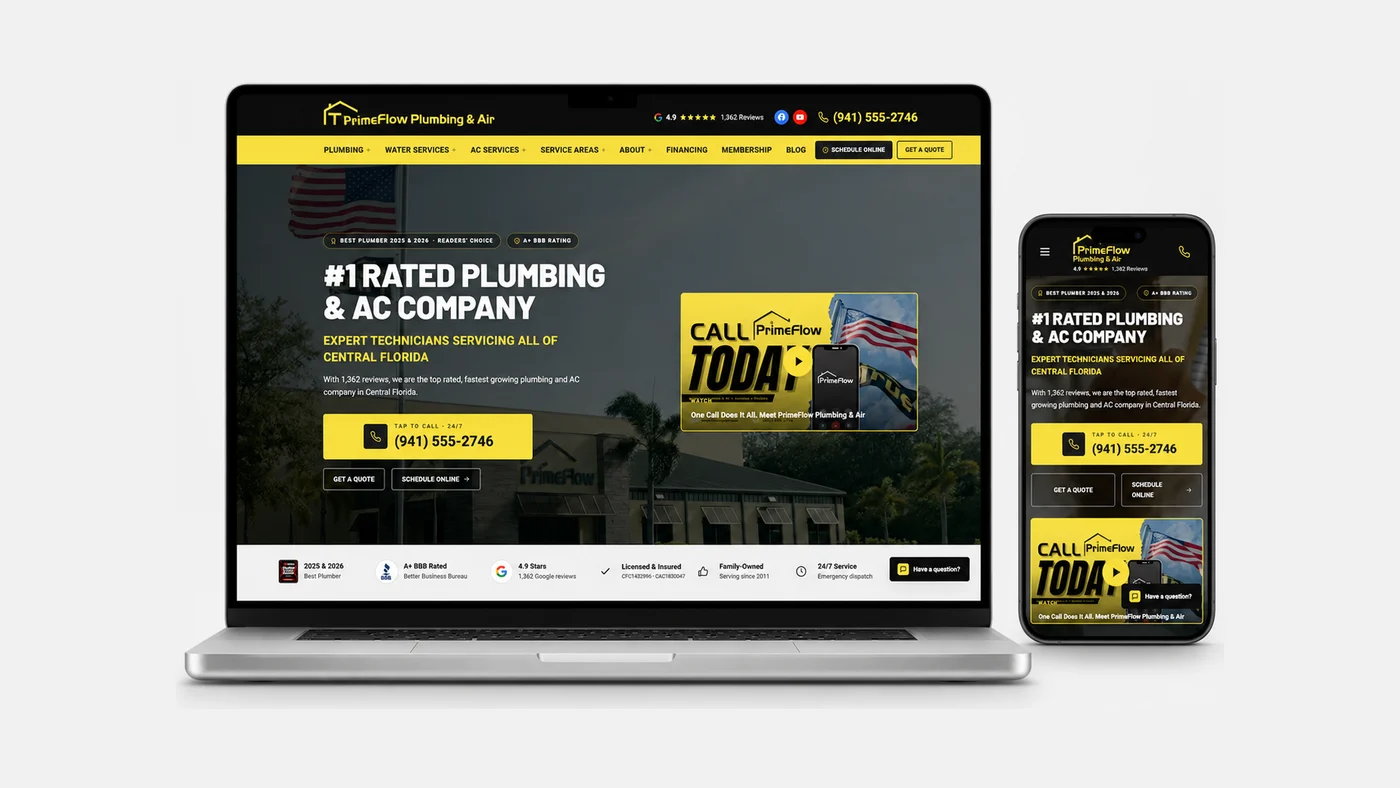
Fast AC repair, often same day in your city, beats Quality HVAC Services. Use call, location, sitelink, and callout extensions. Mobile is the majority of HVAC search in many accounts, so the landing page loads under two seconds, has tap-to-call at the top, a headline that matches the ad, a handful of real reviews, a short form, and the license near the form.
Message match is the whole game. An AC repair ad goes to the AC repair page. Sending everything to the homepage raises bounce rate and raises cost per click.
Weekly rhythm
HVAC emergencies spike on hot afternoons and cold nights. Shift budget to dayparts that book. Run call extensions only when someone answers. An unanswered ad call is the most expensive click you will buy.
- ·Weekly: search terms, new negatives, call grading.
- ·Monthly: daypart and geo bids against booked jobs.
- ·Seasonal: new copy for heat waves, cold snaps, IAQ, and memberships.
- ·Always: answer rate. Fix the phone before you raise bids.
When performance dips, check tracking first, then budget pacing, then auction, then the landing page. We see HVAC accounts where campaigns are fine and a third of ad calls ring out. At tens of dollars a click, that is a donation plus a competitor referral.
Bidding, season, budget
Manual CPC while you learn. Move to automated bidding only after the conversion data is clean and the conversion is a qualified call or a booked job, not a five-field form from a student. Raise bids in heat waves and cold snaps. Pull wasted repair spend in shoulder months and shift it toward memberships, indoor air quality, and replacement.
The first 30 days are a ramp. Review at 30, 60, and 90 days against booked jobs, not against click-through rate. OTT is branding from about $5,000 per month and will not replace Search for same-day calls.
Budget and who runs it
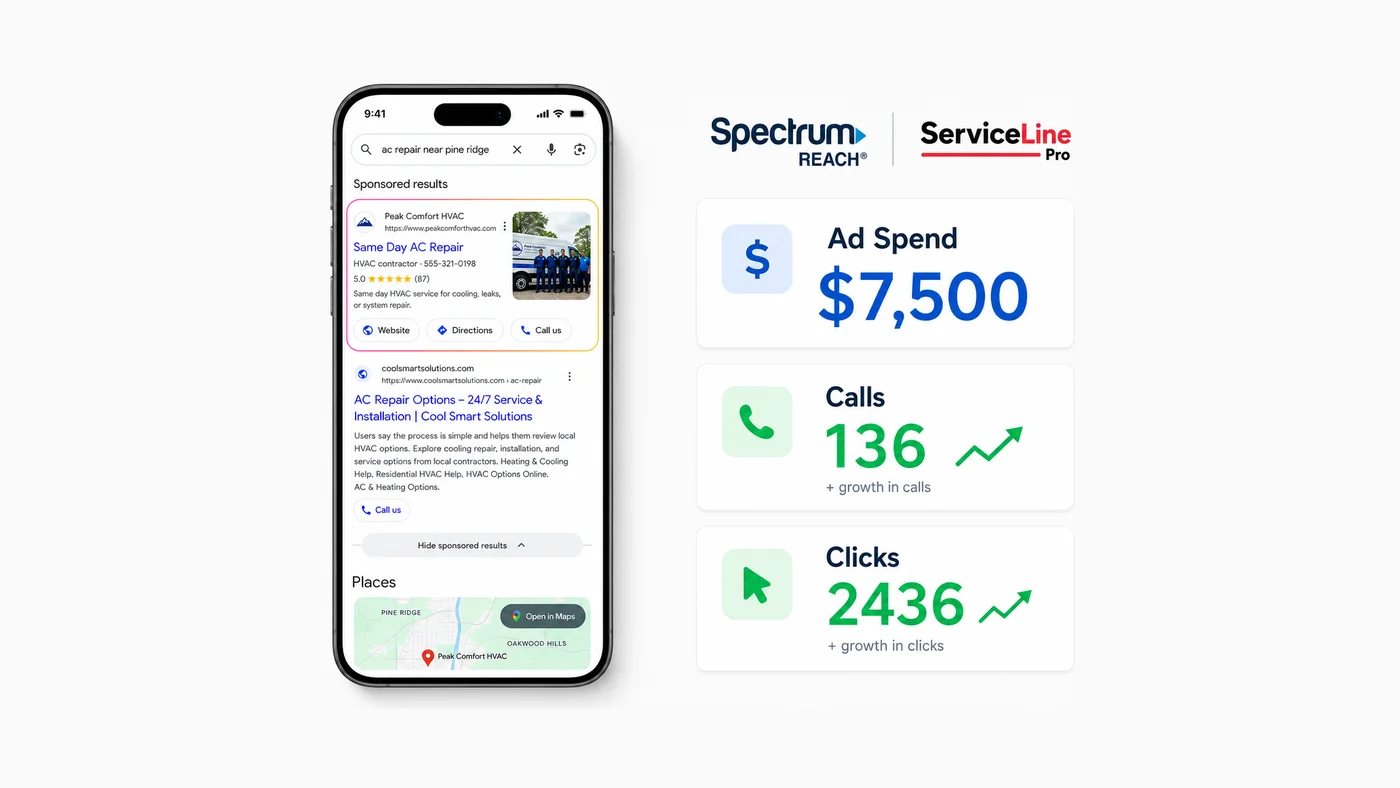
Our Google Ads fee is $0. Spectrum Reach pays us. Around $5,000/mo is typical in a competitive metro. Some areas work closer to $4,000. Tougher markets need more. In our accounts, calls often start inside the first week. Pair with HVAC SEO so you are not renting every click forever.
Growth Audit ($1,000, credited) or strategy call at (813) 328-6341. Agency comparison: best HVAC marketing agencies.
What to ask before raising spend
- ·Are conversions a graded call or a raw form fill?
- ·Is repair versus replace split out, so replacement is not starved?
- ·Do we exclude ZIPs we will not drive in July traffic?
- ·Is call-only limited to hours someone answers?
- ·Does the landing page load under two seconds on a phone?
If three of those are no, raising the budget buys more of the same miss.
Metrics that match how an HVAC company makes money
Cost per lead lies. A $15 lead that never books is worthless, and a $90 lead that closes a replacement plus a maintenance plan is the business. One call-tracking stack across paid, organic, and the profile, with unique numbers per campaign, and calls graded weekly.
- ·Cost per booked job: spend divided by jobs actually on the board.
- ·Revenue per job by source: repair, install, membership.
- ·Booking rate: calls and forms that become appointments.
- ·Answer rate and after-hours coverage, because ads amplify whatever happens on the phone.
- ·Repeat and membership rate, which is the lifetime-value half of the math.
Track lifetime value, not only the first ticket. A tune-up today, a system next year, and two neighbor referrals after that make a channel that looks expensive on the first job look cheap over three years. Reallocate away from any channel that fails cost per booked job for two months in a row, after you have ruled out answer rate.
Where HVAC marketing usually leaks
- ·The ads work, the site exists, and the profile is claimed, but none of them share data.
- ·Converting paid keywords never become service pages.
- ·Reviews sit on Google while landing pages show stock photos.
- ·Tracking covers paid but not organic.
Fix those four and the same budget produces more booked jobs. Ad-proven keywords become SEO page targets each quarter, reviews go on every service and city page, and seasonal offers line up across ads, profile posts, and email. SEO is the other half of that stack.
Frequently Asked Questions
What budget do HVAC Google Ads need?
Around $5,000/mo is typical in a competitive metro. Less than that and data arrives slowly. Peak season may need more. Our agency fee is $0.
Why do HVAC ads get clicks but no calls?
Landing-page friction, research keywords, or a buried phone number. Emergency searchers need tap-to-call. Research searchers need a different page, not a hard sell on a repair ad.
Do HVAC ads work in the off-season?
Yes, on maintenance plans, IAQ, and replacement financing. Clicks are often cheaper. Cost per booked job can beat July if you answer the phone.
Get a real diagnosis of your business.
A seven-layer review of your SEO, Google Ads, website, and Map Pack presence, delivered as a written report within 72 hours. It's $1,000 and it always credits toward any work you do with us. If we don't find $100,000 in missed revenue, we refund it.
Get the Growth Audit