






Most HVAC business owners believe Google Ads are either too expensive or simply don’t work for local service businesses. The truth is exactly the opposite when campaigns are structured correctly. Google Ads can deliver qualified leads at predictable costs while filling your schedule with service calls from nearby customers actively searching for HVAC solutions. This guide walks you through proven strategies to optimize your Google Ads campaigns specifically for local HVAC lead generation, from keyword selection and location targeting to ad copy optimization and smart bidding tactics that maximize your return on investment.
Table of Contents
- Key takeaways
- Understanding how Google Ads work for HVAC businesses
- Choosing the right keywords and location settings for local HVAC leads
- Optimizing ad copy and landing pages to boost HVAC service calls
- Smart bidding and ongoing optimization for HVAC Google Ads success
- Grow your HVAC business with expert Google Ads management
- Frequently asked questions
Key Takeaways
| Point | Details |
|---|---|
| Local targeting settings | Prioritize zip codes, cities, and radius targeting to reach nearby homeowners actively seeking HVAC services. |
| Call and form optimization | Customize ads and landing pages to drive phone calls and online form submissions for qualified leads. |
| Conversion based bidding | Use bidding strategies that optimize for lead conversions to maximize return on ad spend. |
| Cost per lead optimization | Regularly analyze performance data and adjust campaigns to lower cost per lead. |
| Local Services Ads integration | Incorporate Local Services Ads with standard campaigns to improve visibility and ROI. |
Understanding how Google Ads work for HVAC businesses
Google Ads offer powerful targeting tools to reach local home service customers effectively, making them ideal for HVAC companies focused on generating service calls from nearby homeowners. The platform allows you to control exactly who sees your ads based on location, search keywords, device type, and time of day. This precision ensures your budget goes toward prospects most likely to need your services right now.
Different campaign types serve distinct purposes for HVAC businesses. Search network campaigns display text ads when people actively search for HVAC services on Google. Display campaigns show visual ads across millions of websites to build brand awareness. Local Services Ads appear at the very top of search results and operate on a pay-per-lead model specifically designed for home service providers. Most successful HVAC companies run multiple campaign types simultaneously to maximize visibility across the customer journey.
Keyword targeting forms the foundation of effective HVAC campaigns. You bid on search terms related to repairs, installations, maintenance, and emergency services combined with local modifiers. When someone in your service area searches for “AC repair near me” or “furnace installation Tampa,” your ad can appear immediately. The quality and relevance of your keywords directly impact both your ad position and cost per click.
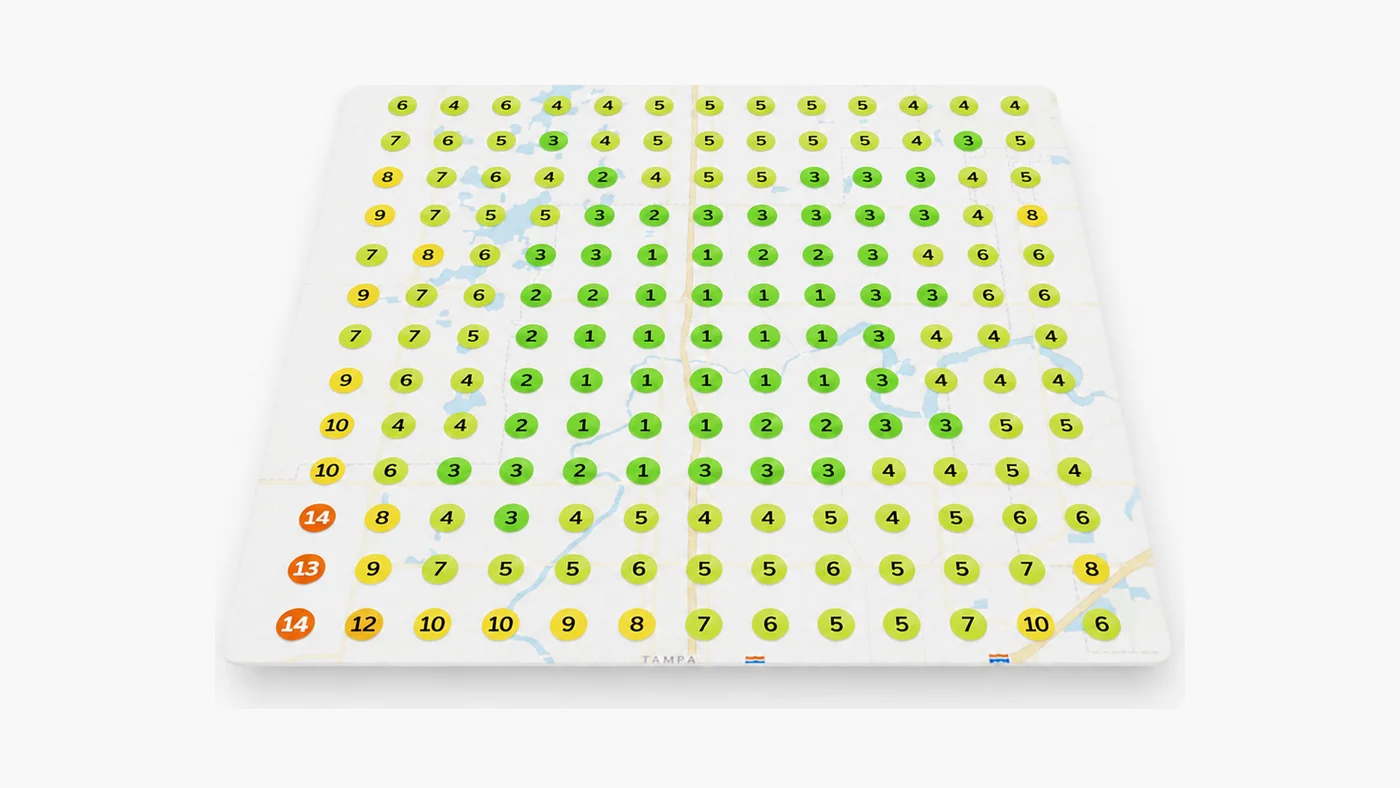
Location targeting ensures you only pay for clicks from potential customers you can actually serve. You can target specific zip codes, cities, or draw a radius around your business location. This geographic precision prevents wasted spend on people outside your service area. Advanced HVAC advertisers adjust bids by location, paying more for areas with higher conversion rates or premium customers.
Understanding keyword match types gives you control over ad triggering. Exact match shows ads only for the precise keyword phrase. Phrase match includes variations with additional words before or after. Broad match captures related searches but requires careful management to avoid irrelevant clicks. Most HVAC campaigns start with phrase and exact match for better lead quality, then expand strategically.

Pro Tip: Start with a small daily budget focused on your highest-intent keywords like “emergency HVAC repair” and “AC not working” to generate immediate leads while you optimize broader campaigns.
Choosing the right keywords and location settings for local HVAC leads
Keyword research determines whether your Google Ads investment generates quality leads or drains your budget on irrelevant clicks. HVAC businesses must focus on localized keywords and precise location targeting to reduce wasted spend and improve conversion rates. Start by listing every service you offer, then add local modifiers like city names, neighborhoods, and “near me” phrases that capture immediate local intent.
Use Google’s Keyword Planner and competitor research tools to identify high-intent search terms with manageable competition levels. Look for keywords with clear commercial intent, meaning the searcher wants to hire someone now rather than just research options. Terms like “AC repair service,” “furnace installation cost,” and “emergency HVAC technician” indicate readiness to book, while “how does air conditioning work” suggests research mode. Prioritize keywords that align with your most profitable services and have conversion potential.
| Keyword Type | Example | Avg CPC | Intent Score |
|---|---|---|---|
| Local Service | “AC repair Orlando” | $18-$35 | 9/10 |
| Emergency | “24 hour HVAC repair near me” | $25-$45 | 10/10 |
| Installation | “new furnace installation Tampa” | $22-$40 | 8/10 |
| Broad Service | “air conditioning repair” | $12-$28 | 6/10 |
| Informational | “how to fix AC” | $3-$8 | 2/10 |
Location targeting requires strategic thinking beyond simply selecting your state. Set your primary targeting to the specific cities, zip codes, or radius around your business where you want to generate leads. A 20-30 mile radius works well for most HVAC companies, but adjust based on your actual service area and willingness to travel. Dense urban areas may warrant tighter targeting, while rural HVAC businesses might expand their radius to capture sufficient search volume.

Exclude locations where you don’t provide service to prevent showing ads to people you can’t help. This seems obvious but many HVAC businesses waste significant budget on clicks from areas just outside their service zone. Use location exclusions at the zip code level for precision. Review your Google Ads checklist for home services to ensure all targeting settings align with your business model.
Negative keywords are equally important as target keywords for HVAC campaign success. Add terms like “DIY,” “how to,” “jobs,” “salary,” and “training” to prevent ads from showing on informational or employment searches. Review search term reports weekly and continuously add negative keywords that trigger your ads but never convert. This ongoing refinement improves lead quality while reducing cost per acquisition.
Pro Tip: Create separate campaigns for different service areas or cities to track performance by location and adjust bids based on which areas generate the best leads and highest profit margins.
Optimizing ad copy and landing pages to boost HVAC service calls
Your ad copy determines whether searchers click your ad instead of competitors, while your landing page decides if that click becomes a booked service call. Well-optimized ad copy and landing pages significantly increase click-through and conversion rates by addressing customer concerns and making the next step crystal clear. HVAC ad copy should emphasize speed, reliability, and local expertise since these factors matter most to homeowners with heating or cooling emergencies.
Write headlines that speak directly to the searcher’s immediate need. “Fast AC Repair in 2 Hours” beats “Quality HVAC Services” every time because it promises a specific outcome. Include your city or service area in headlines to reinforce local relevance. Use the description lines to highlight competitive advantages like 24/7 availability, licensed technicians, upfront pricing, or satisfaction guarantees. Every word should move the prospect closer to calling or clicking.
Calls to action must be direct and action-oriented. “Call Now for Emergency Repair,” “Schedule Your Free Estimate Today,” or “Book Same-Day Service” tell people exactly what to do next. Avoid passive language like “Learn More” or “Visit Our Website” that delays the conversion. HVAC customers want solutions fast, so your ad copy should match that urgency.
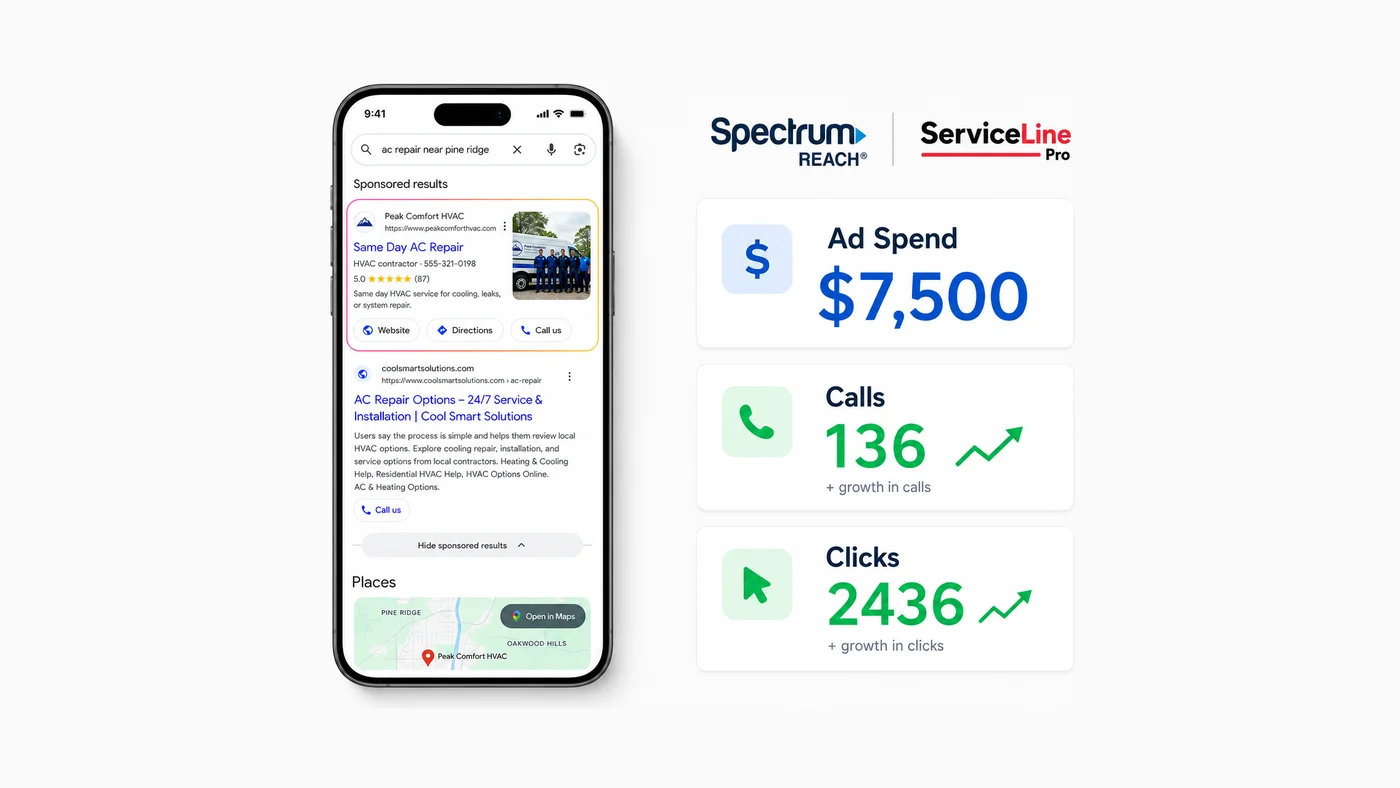
Ad extensions dramatically improve performance by making your ads larger and more informative. Call extensions display your phone number directly in the ad, enabling mobile users to tap and call immediately. Location extensions show your address and distance from the searcher. Sitelink extensions let you highlight specific services like “AC Repair,” “Furnace Installation,” or “Maintenance Plans.” Callout extensions emphasize benefits like “Licensed & Insured” or “Financing Available.” Use every relevant extension to maximize visibility and provide multiple conversion paths.
| High-Converting Landing Page | Typical Service Page |
|---|---|
| Single focused offer (AC repair) | Multiple services listed |
| Prominent phone number above fold | Contact info in footer |
| Mobile-optimized click-to-call button | Desktop-focused design |
| Customer reviews and trust badges | Generic company information |
| Fast load time under 2 seconds | Slow loading with large images |
| Simple contact form (3-4 fields) | Long form requesting excessive details |
Landing pages must be laser-focused on converting visitors into leads. Each ad group should direct to a dedicated landing page matching the ad’s promise. If your ad promotes AC repair, the landing page should be entirely about AC repair, not your full range of HVAC services. This message match between ad and page reduces bounce rates and increases conversions.
Mobile optimization is non-negotiable since over 60% of HVAC searches happen on smartphones. Your landing page must load in under two seconds, display perfectly on small screens, and feature a prominent click-to-call button at the top. Test your pages on multiple devices to ensure flawless mobile experiences. Check out these Google Ads examples for home services to see what high-converting campaigns look like in action.
Follow these five steps to optimize landing pages for maximum lead capture:
- Place your phone number prominently at the top in large, tappable text with click-to-call functionality
- Write a clear headline that matches your ad copy and confirms the visitor landed in the right place
- Include 3-5 customer reviews or testimonials with photos to build immediate trust and credibility
- Keep contact forms simple with only essential fields like name, phone, email, and service needed
- Add trust indicators like licenses, certifications, years in business, and guarantee information near the form
Smart bidding and ongoing optimization for HVAC Google Ads success
Bidding strategy determines how efficiently your budget generates leads. Regular data-driven tweaks and automated bidding maximize lead volume while controlling costs in competitive HVAC markets. Start with manual cost-per-click bidding to maintain control while you gather performance data and learn which keywords convert best. Set initial bids based on your target cost per lead, working backward from your average job value and desired profit margins.
Once your campaign accumulates 30-50 conversions, transition to automated bidding strategies that use machine learning to optimize performance. Target CPA bidding automatically adjusts bids to generate conversions at your specified cost per acquisition. Maximize Conversions bidding focuses on getting the most leads within your daily budget. Enhanced CPC keeps manual bidding but adjusts bids up or down based on conversion likelihood. Each strategy serves different business goals, so choose based on whether you prioritize volume, efficiency, or control.
Monitor cost per lead religiously and compare it against your average customer lifetime value. If you spend $80 to acquire a customer worth $500 in initial revenue plus future maintenance contracts, that’s excellent ROI. But if your cost per lead climbs to $200 for the same customer, you need immediate optimization. Track these metrics in a spreadsheet or dashboard to spot trends before they damage profitability.
Conversion tracking connects your Google Ads spend to actual business results. Set up tracking for phone calls, form submissions, and chat interactions so you know exactly which keywords and ads generate leads. Install Google Analytics and link it to your Ads account for deeper insights into user behavior. Track beyond the initial lead to measure booked appointments and completed jobs when possible. This data reveals your true return on ad spend and guides optimization decisions.
Key optimization tactics to implement consistently:
- Pause keywords with high cost and zero conversions after accumulating 50-100 clicks
- Increase bids on high-performing keywords that generate leads below your target CPA
- Run A/B tests on ad copy by creating multiple ads per ad group and letting Google optimize delivery
- Schedule ads to show during your business hours or peak call times when you can respond immediately
- Refine negative keywords weekly based on search term reports to eliminate wasted clicks
- Adjust bids by device if mobile or desktop performs significantly better for your business
- Review your complete Google Ads checklist monthly to ensure all optimization opportunities are addressed
Bid adjustments let you pay more or less based on factors that influence conversion rates. Increase bids by 20-50% for locations that generate your best customers. Raise bids during times when your conversion rates are highest. Lower bids for devices or audiences that rarely convert. These granular adjustments compound over time to significantly improve campaign efficiency.
Pro Tip: Set bid adjustments by location to bid 30-50% more aggressively in zip codes where your average job value is higher or where you have existing satisfied customers who can provide referrals and reviews.
Grow your HVAC business with expert Google Ads management
Mastering Google Ads takes time most HVAC business owners don’t have while running daily operations. Partnering with specialists who understand both paid advertising and the home services industry accelerates your growth without the learning curve. You get campaigns built specifically for HVAC lead generation, optimized continuously based on performance data, and scaled strategically as results prove out.
ServiceLinePro delivers Google Ads management with no agency fees, charging only for actual results rather than monthly retainers that drain budgets regardless of performance. Our home services digital marketing approach combines paid advertising with organic strategies to dominate your local market across all channels. When you’re ready to move beyond trial and error, our proven systems and exclusive first-party data give you an unfair advantage over competitors still figuring things out. Pair your Google Ads with our step-by-step SEO strategy for home services to maximize visibility and lead flow from every possible source.
Frequently asked questions
Is Google Ads cost-effective for small HVAC businesses?
With proper targeting and optimization, Google Ads delivers highly cost-effective results by generating qualified local leads at manageable costs. Many small HVAC businesses see measurable ROI within the first month by focusing on high-intent keywords and tracking performance metrics closely. The key is starting with a realistic budget, targeting your most profitable services first, and adjusting based on actual conversion data rather than assumptions.
How do local services ads differ from regular Google Ads for HVAC?
Local Services Ads appear at the very top of search results above traditional Google Ads and operate on a pay-per-lead model rather than pay-per-click. Google verifies your business credentials and only charges when customers contact you directly through the ad. Regular Google Ads offer more control over messaging, targeting, and budget allocation across search and display networks. Most successful HVAC companies run both campaign types simultaneously to maximize visibility and capture leads from different customer segments.
What budget should HVAC businesses allocate to Google Ads?
Monthly budgets typically range from $1,500 to $5,000 depending on service area size, market competition, and lead volume goals. Smaller markets or businesses just starting might succeed with $800-$1,200 monthly, while competitive metro areas often require $3,000-$8,000 to generate sufficient lead flow. The smartest approach is starting with a modest budget focused on your highest-value services, then increasing spend as you prove ROI and optimize conversion tracking. Review the complete bidding guide to determine appropriate budget levels for your specific market.
How often should I review and update my HVAC Google Ads campaigns?
Review key performance metrics like cost per lead, conversion rate, and search terms weekly to catch problems early and capitalize on opportunities quickly. Perform deeper optimization including bid adjustments, ad copy testing, and landing page improvements monthly or quarterly based on accumulated data. The competitive landscape and search behavior change constantly, so campaigns left untouched for months inevitably waste money and miss leads. Set a recurring calendar reminder for weekly check-ins and monthly optimization sessions to maintain peak performance.