







Your phone spikes when someone finds termites in the wall, roaches in the kitchen, or a rat in the attic. Then it goes quiet. That cycle is normal in pest control if you live on panic calls, yard signs, and whatever Google happens to send.
SEO for a pest control company is not a branding hobby. You need to show up when a nearby owner wants an inspection, same-day service, or a termite quote. Win that search and you win the job. Miss the Map Pack and you hand urgent work to whoever kept their Google Business Profile alive.
Generic SEO advice (publish blogs, wait, collect random links) is incomplete for this trade. Pest search is seasonal, species-specific, and often emergency-driven. The faster path is Map Pack visibility, a complete profile, service pages that name the pest, and paid search while organic climbs.
Stop living on emergency-only volume
Reactive shops wait for droppings in the pantry or scratching in the attic. Those jobs pay. They do not build a predictable quarter by themselves. The stronger operators sit on the searches that already exist: termite inspection, bed bug treatment, rodent exclusion, mosquito control, and quarterly plans.
"If growth depends on people remembering your truck wrap, the pipeline is fragile. If growth depends on owning local search for the pests you treat, the pipeline compounds."
Think with Google has reported that 76% of people who search on a smartphone for something nearby visit a related business within 24 hours. Pest callers are rarely browsing. They want a truck.
A useful lead mix looks like this:
- ·Emergency jobs from Map Pack and LSAs when something is crawling tonight.
- ·Inspection and estimate calls from service pages (termite, wildlife, bed bugs).
- ·Recurring revenue from maintenance plans you actually ask for after the first visit.
- ·Commercial accounts from separate pages and a separate Google category if you do that work.
"If growth depends on people remembering your truck wrap, the pipeline is fragile. If growth depends on owning local search for the pests you treat, the pipeline compounds."
Google Business Profile is the fastest lever
For “termite inspection near me” and “bed bug treatment [city],” Google often shows the map before the website. A stale profile loses the job before a prospect clicks.
- 01 Primary category: Pest control service. Add secondaries only for work you sell: termite control service, wildlife removal service, and so on.
- 02 Match name, address, and phone everywhere. One format. No leftover tracking numbers on old directories.
- 03 Service areas by city. Do not claim a county you cannot reach in a same-day window.
- 04 List services as separate line items: termites, rodents, ants, mosquitoes, bed bugs, exclusion, inspections, commercial if you do it.
- 05 Write a description that names pests, cities, and licenses. Skip “quality pest solutions for homes and businesses.”
Activity is the strategy
A claimed profile is not a campaign. Google wants proof the business is real and busy.
- ·Jobsite photos: techs, trucks, bait stations, attic work, exclusion, before and after. Rotate cities.
- ·Q&A: “Do you treat for termites?” “Are you licensed?” “Do you offer quarterly plans?” Answer them yourself.
- ·Posts tied to season: spring ants, summer mosquitoes, fall rodents, swarm season for termites in your market.
- ·Review replies that mention the service type and city when it is natural.
- ·Hours and holiday changes kept current. A closed listing on a Saturday you actually work costs jobs.
Pages for pests, not one generic services blob
A homeowner searching “termite inspection” and one searching “mouse in attic” need different proof. One generic page cannot rank for both and cannot convert both.
- ·One page per pest or treatment you want to sell, with process, what to expect, and photos from real jobs.
- ·City pages only for markets you staff. Name housing types and pest pressure there. No 40-city templates.
- ·License, insurance, and manufacturer affiliations on the site and in citations (state pest license, NPMA where relevant).
- ·Schema: LocalBusiness, Service, and FAQ on questions people actually ask before they book.
Load time under two seconds on mobile. Pest searches happen at night on a phone. We ship sites in 30 days at $4,500 once or $449/mo for 12 months.
Reviews and citations that match the trade
Ask for a Google review after every completed job, with a text link. Termite and wildlife jobs should mention the service in the review when the customer writes it honestly. Do not script fake five-star copy.
Citations: Yelp, BBB, Apple Business Connect, Bing Places, Angi, and industry directories. Keep NAP identical. Yelp is a review and citation source, not a paid lead program we sell.
Paid coverage while the map moves
SEO campaigns run $3,000/mo with a 90-day Top-3 Map Pack target. If we miss it, we keep working. AI SEO and Extra Link Building are +$1,500/mo each, only with active SEO.
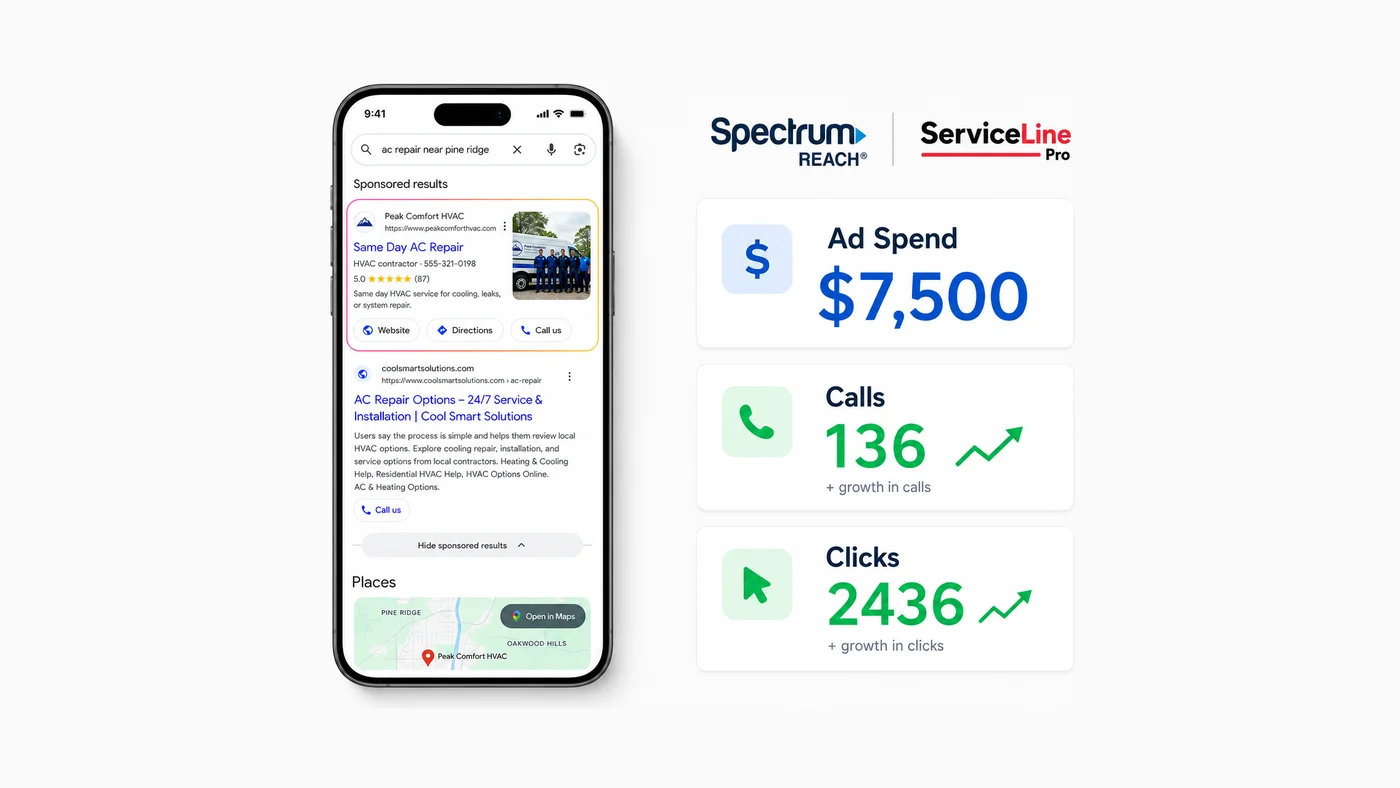
Google Ads with a $0 agency fee through our Spectrum partnership covers termite season and same-day rodent calls while rankings climb. Around $5,000/mo is typical in a competitive metro. Calls often start inside seven days.
If you want qualified calls only, Pay Per Qualified Lead starts with a $1,000 deposit that credits toward those calls. You pay when the caller is a decision maker, during business hours, with real interest, and contact captured.
Track every source to booked jobs. Grade calls. Seasonal pest work will swing. The scoreboard is cost per booked job and plan retention, not clicks.
Start with the Growth Audit ($1,000, credited) or book a strategy call at (813) 328-6341.
Frequently Asked Questions
What category should a pest control company use on Google?
Pest control service as primary. Add termite, wildlife, or other secondaries only if you sell that work. Wrong categories send you into the wrong Map Pack.
How long until pest control SEO shows in the Map Pack?
We target Top-3 in 90 days. That is a target, not a guarantee. Review velocity, a complete profile, and accurate service areas move first. Competitive termite terms can take longer.
Should pest companies run ads in the off-season?
Yes, on inspections, exclusion, and plans. Clicks are often cheaper when panic volume drops, and those jobs fill the board before swarm season.
Get a real diagnosis of your business.
A seven-layer review of your SEO, Google Ads, website, and Map Pack presence, delivered as a written report within 72 hours. It's $1,000 and it always credits toward any work you do with us. If we don't find $100,000 in missed revenue, we refund it.
Get the Growth Audit