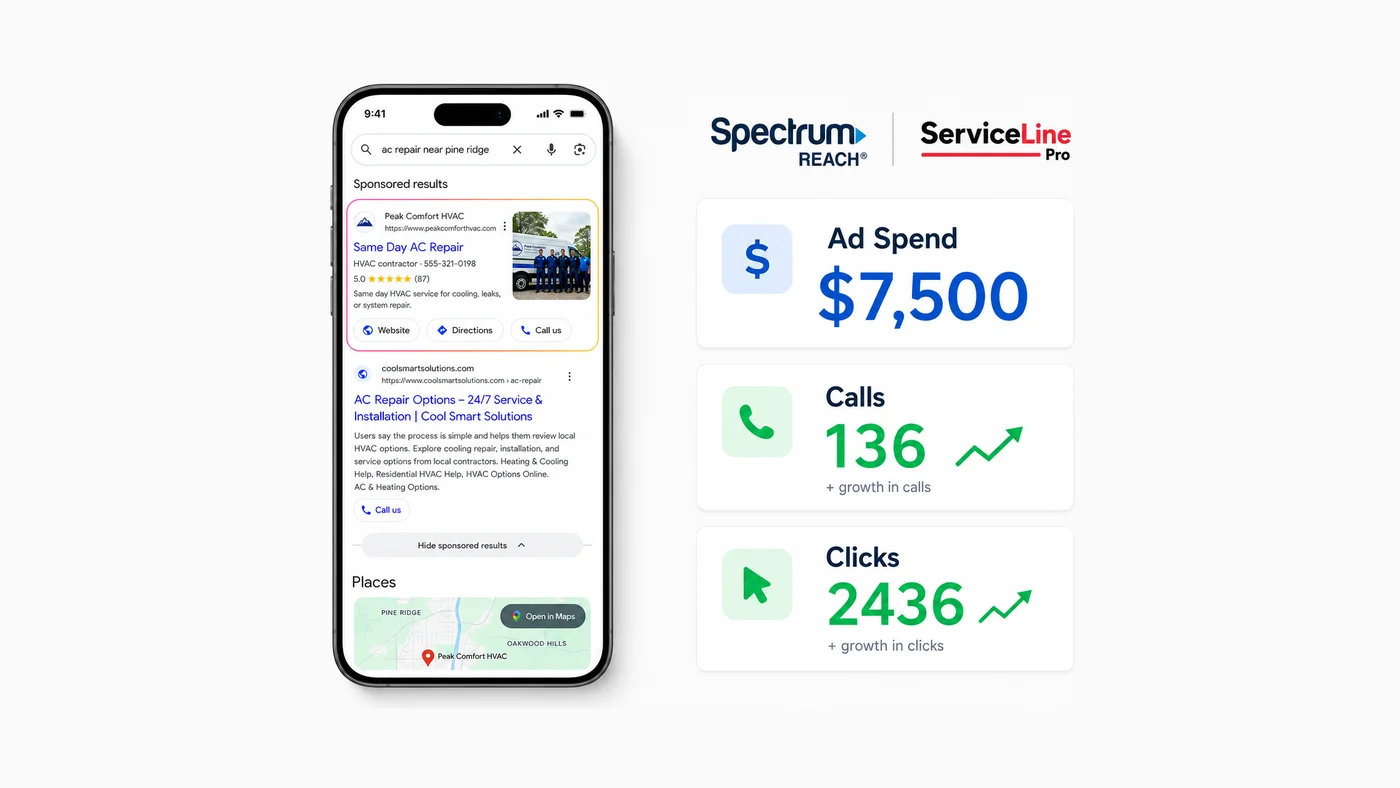
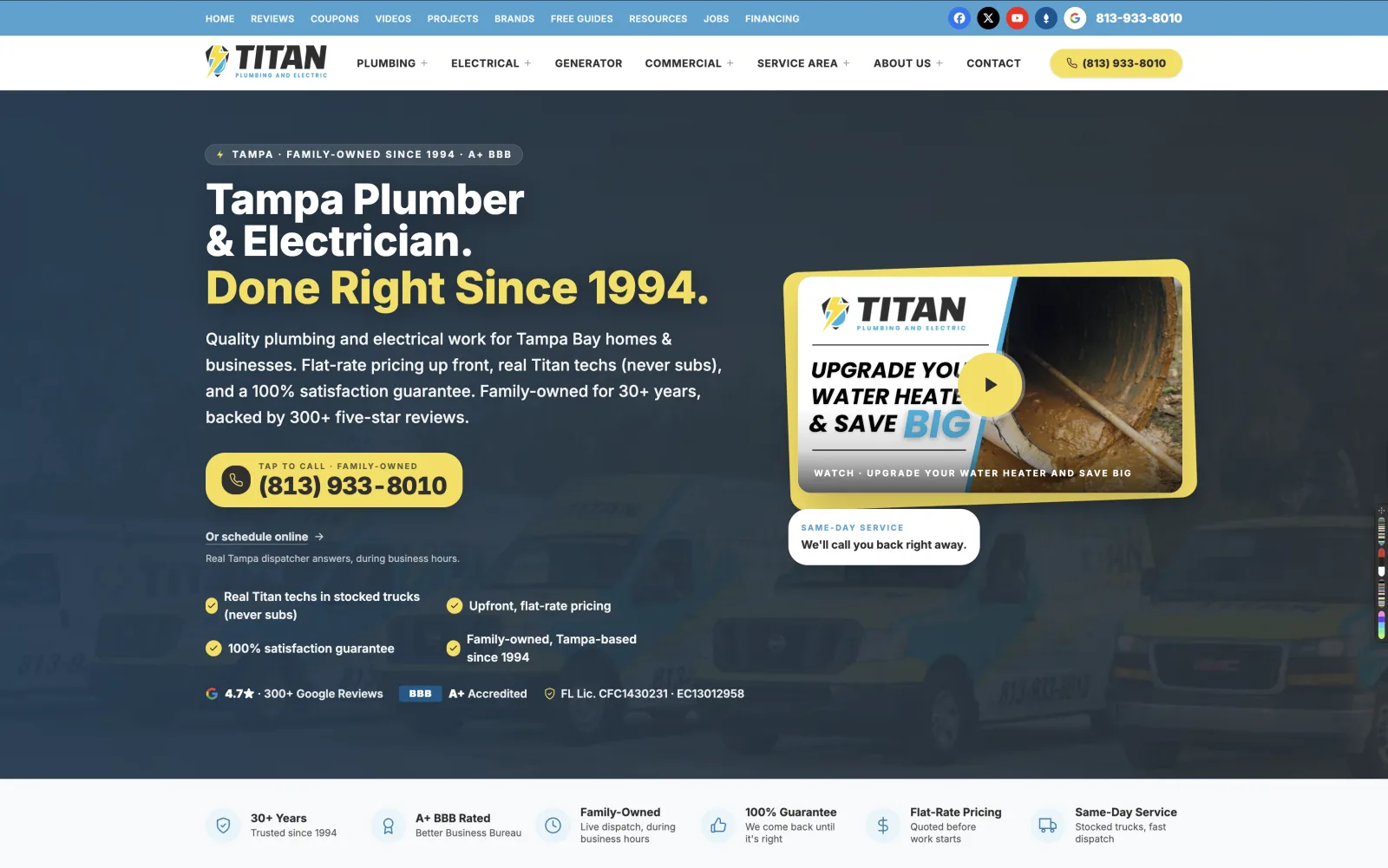
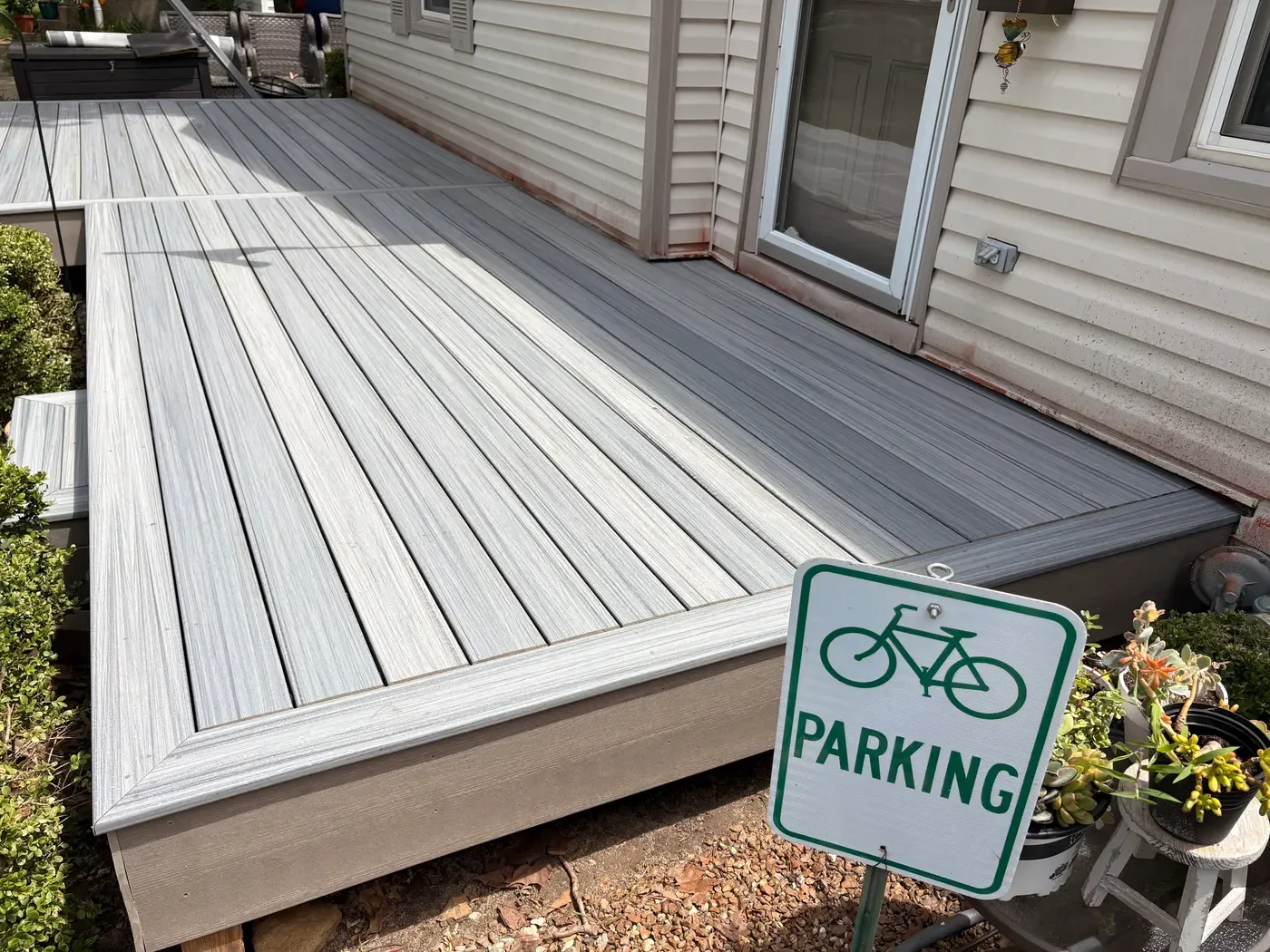

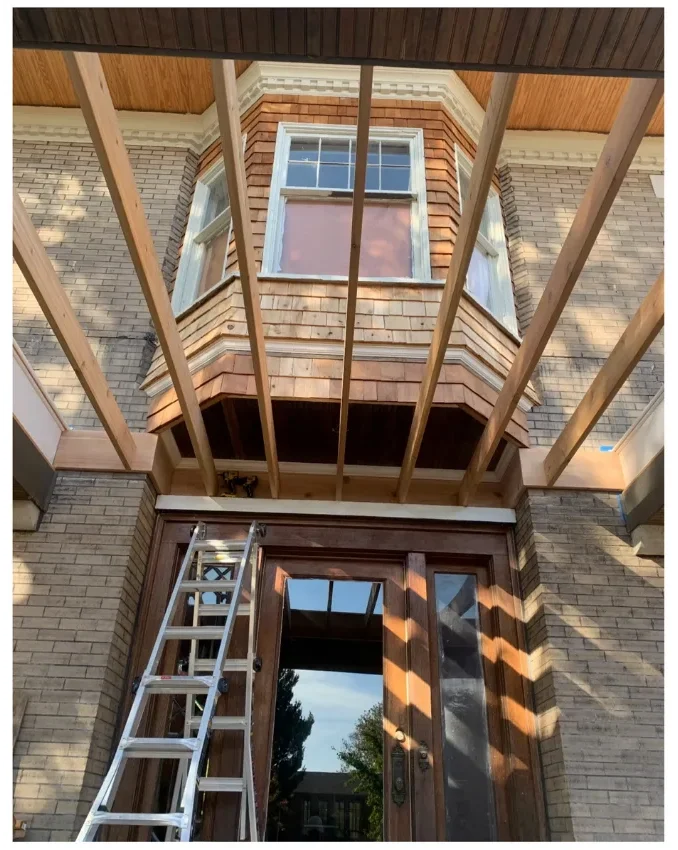







Florida search is crowded because the state has year-round demand, storm seasons that spike overnight, and metros where five shops bid on the same phrase. Content is how a general contractor, pool builder, or HVAC company gives Google something specific to rank: a page for the job, the city, and the season, written from work you actually did.
Blog posts that could run in Ohio do not help a Tampa roofer. A page that names the tile roofs in a neighborhood, the permitting office, and a job you finished last month does. This piece is about that kind of content, not a generic publishing calendar.
Content that earns a ranking in Florida
Google ranks pages that match the query and look like they belong to a real local business. For a service company that means three page types first, then supporting articles.
Service pages for the jobs you sell
Roof replacement, impact windows, outdoor kitchens, pool resurfacing, AC replacement, and similar jobs each need their own URL. Put crew photos, a short process, the cities you cover, and a click-to-call button. Schema for the service type belongs on the page. One generic Services dump cannot outrank a competitor who split the work into ten pages.
"Florida contractors rank with service pages, city pages, and seasonal content tied to real jobs. What to publish, what to skip, and how to measure it."
City and neighborhood pages you can defend
A page for St. Petersburg, Lakeland, or Fort Myers only works if you work there. Include housing stock, common roof or HVAC types, permit notes, and two or three jobs. Duplicate city templates with the name swapped are a common audit finding and a waste of crawl budget.
Seasonal and storm content timed to Florida
Hurricane prep, post-storm roof inspections, spring AC load, and summer pool openings search in waves. Publish those pages before the spike, keep them updated, and point Google Business Profile posts at them when the weather turns. Do not wait until the storm is already on the map.
- ·Service pages: one URL per job you want to sell.
- ·Area pages: one URL per city you actually serve, with local proof.
- ·Seasonal pages: storm, heat, and rainy-season topics published ahead of demand.
- ·Project pages: named jobs with photos, which also feed GBP.
What to skip
Weekly 400-word blogs about generic homeowner tips do not move Map Pack. Neither do AI articles stuffed with city names. If a page could be copied onto a pest control site in another state and still read fine, it is not Florida content.
Also skip thin FAQ dumps that repeat the service page. Put the three questions people ask before they call on the service page itself. Save the blog for topics that need length: permitting timelines, material choices, or a real project walkthrough.
How content supports the Map Pack
The Map Pack still leans on Google Business Profile, proximity, reviews, and category. Website content supports it by proving relevance. When someone searches pool builder plus a city, Google looks at whether your site talks about that work in that place. Ranking in Google Maps covers the profile side. Content is the site-side match.
Internal links matter. The homepage should not be the only path to a service page. The city page should link to the services you sell there. Google Business Profile posts should link to the page you want to rank, not only to the homepage.
A publishing order that an owner can run
- 01 List the five services that produce the most revenue. Confirm each has a unique page.
- 02 List the five cities that produce the most jobs. Confirm each has a unique page with real proof.
- 03 Add one seasonal page for the next 90 days of Florida weather or storm risk.
- 04 Connect each new page from the homepage, the service menu, and a GBP post.
- 05 Measure calls and form fills on those URLs for 60 days before writing more articles.
How to measure content without vanity traffic
Unique pageviews on a blog post do not pay a crew. Look at calls and form fills attributed to the URL, ranking for the service-plus-city query, and whether paid search still has to buy that same query. If a page ranks and the phone stays quiet, the page is missing proof, a phone number, or a form that works on mobile.
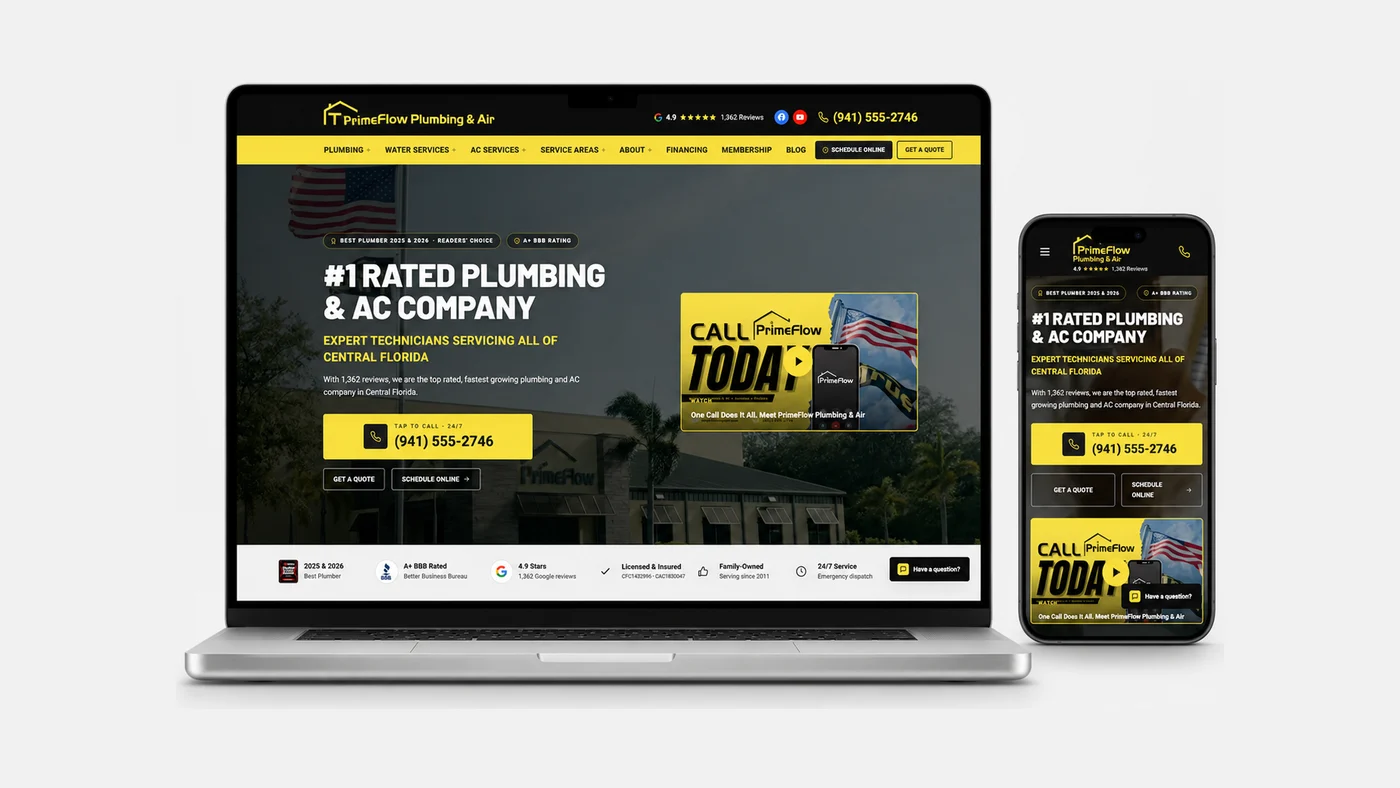
Sites we build for contractors load in under two seconds and put click-to-call above the fold on a phone. Slow pages waste the ranking. See performance websites if the current site is a page-builder that takes four seconds on LTE.
Where this fits in a Florida SEO campaign
Content is one piece of local SEO campaigns at $3,000 per month: Google Business Profile, citations, reviews, technical cleanup, and pages. Extra Link Building is +$1,500 per month when a metro needs more authority. AI SEO is +$1,500 per month on top of active SEO if you want ChatGPT and Perplexity citing those same pages.
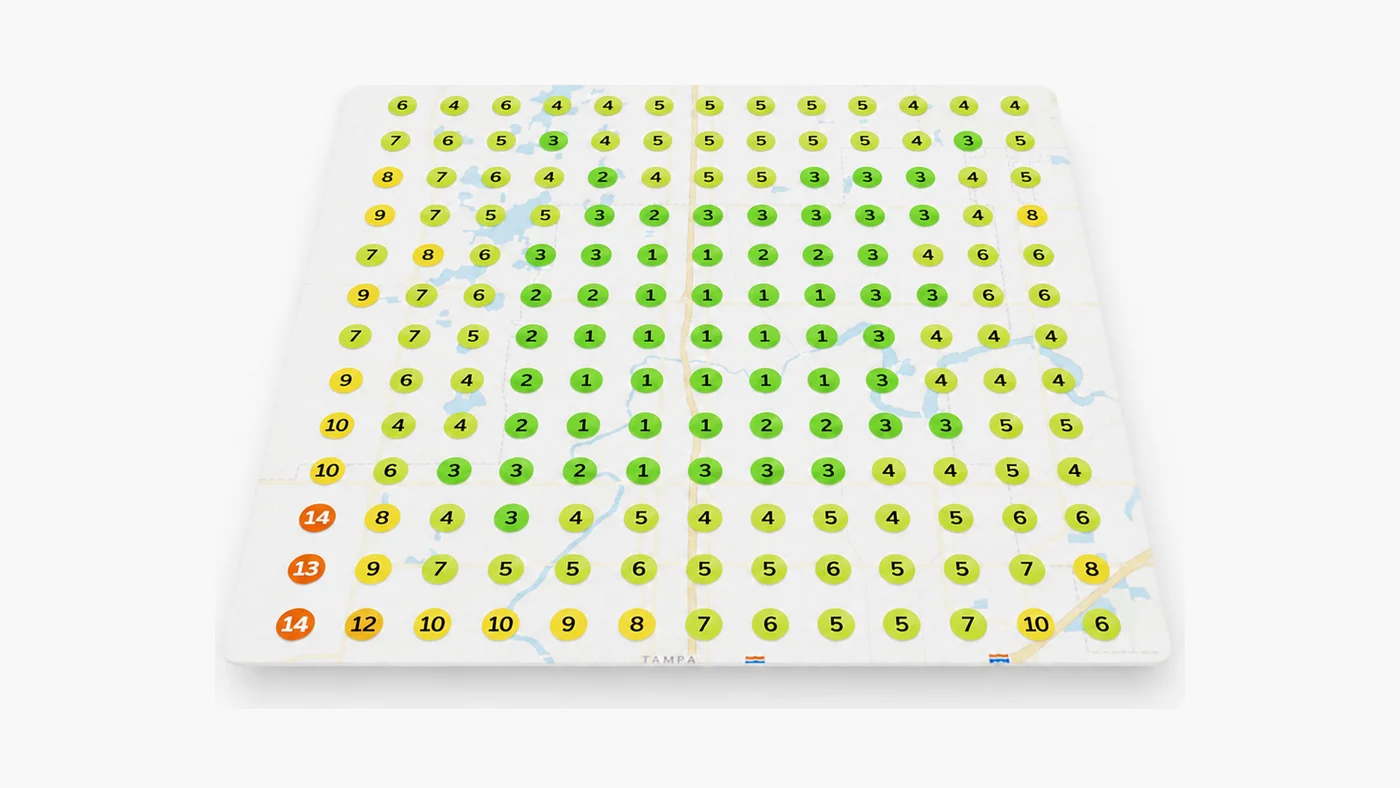
The 90-day Top-3 Map Pack target is a target. If we miss it, we keep working. Content published in month one still has to earn trust in a competitive Florida grid. Do not expect a new city page to outrank a 10-year incumbent in two weeks.
For a written map of which pages you are missing, start with the $1,000 Growth Audit. To talk through Florida content and rankings, book a strategy call at (813) 328-6341.
Florida pages that actually get used by estimators
A useful roof replacement page in Florida talks about tile vs shingle vs metal in the housing stock you see, who pulls the permit, and what happens after a storm inspection. A useful pool page talks about screens, salt systems, and HOA packets. A useful cabinet page talks about humidity and finish choices. If your estimator would not send the URL to a customer, keep writing.
Project pages are underrated. Name the city, the job, and show five photos. They support GBP, they give AI systems something to quote, and they give a closer a leave-behind. One real project beats three generic 'benefits of hiring a local contractor' posts.
Internal linking without a spiderweb
Home to services. Each service to two cities you actually work. Each city back to the two services you sell there. GBP posts to the URL you want to move this month. That is enough. Do not build a 200-link footer of every suburb from Pensacola to Key West.
Frequently Asked Questions
How many blog posts does a Florida contractor need per month?
Most shops need service and city pages first. After those exist, one useful seasonal or project article per month beats four generic posts.
Do city pages still work in Florida?
They work when they prove you work there. Jobs, photos, and local detail beat a template with the city name swapped.
Should content mention hurricanes every time?
Only when the page is about storm work or seasonal prep. Stuffing hurricane into every paragraph looks forced and does not help a kitchen remodel page.
Can AI write the pages for us?
Use it for outlines. The ranking pages need your photos, your process, and facts an estimator would stand behind.
Get a real diagnosis of your business.
A seven-layer review of your SEO, Google Ads, website, and Map Pack presence, delivered as a written report within 72 hours. It's $1,000 and it always credits toward any work you do with us. If we don't find $100,000 in missed revenue, we refund it.
Get the Growth Audit