





Excellent 4.9 out of 5

Home Service Marketing Experts 

Rank On Google

Local SEO

Be the First, and Only Option Your Customers See When They Search For Your Services

No Agency Fee Google Ads

Reach your ideal customers with precision targeting powered by exclusive first-party data and AI-optimized campaigns.

SEO for Homebuilders: Your Guide to Winning in 2026

SEO for homebuilders isn't just a marketing buzzword. It’s the process of making sure that when your ideal client searches Google for “new construction homes in [Your City]” or “custom home builder near me,” your company is the first one they see.

A solid SEO strategy is the digital blueprint for your entire sales pipeline, turning online searches into signed contracts.

Why SEO Is Your Most Valuable Digital Blueprint

Think about how people find a builder today. The journey no longer starts with a drive through a new development. It starts with a search bar. For a homebuilder, this means your most valuable real estate isn't a plot of land—it's the top of Google's search results page.

This is where a dedicated SEO for homebuilders strategy becomes your most powerful asset. Think of it as your digital model home on the busiest street in the world. Without it, you're a fantastic builder hidden away on a back road, hoping someone stumbles upon you. With it, you're the first, most trusted name that serious homebuyers find.

This entire process, from that initial search to a signed contract, follows a clear path. A good strategy connects every single step.

Flowchart illustrating an SEO strategy for homebuilders, detailing steps from search to revenue generation.

When you see it mapped out, it's clear: targeted SEO is the foundation for turning online interest into actual, measurable revenue for your business.

From Digital Footprint to Signed Contracts

The statistics don't lie. The way people buy homes has fundamentally changed, and your marketing has to change with it.

| The Modern Homebuyer's Digital Journey |
| :— | :— |
| Statistic | Implication for Homebuilders |
| 97% of homebuyers begin their search online. | If you're not visible on Google, you're invisible to nearly all of your potential customers. |
| 78% of new construction buyers use a builder's website as a primary information source. | Your website isn't a brochure; it's your primary sales center. It has to be fast, helpful, and easy to find. |
| SEO leads have a 14.6% close rate, compared to just 1.7% for outbound leads. | The leads you get from search are actively looking for a builder. They're higher quality and more likely to convert. |

These numbers prove that a strong online presence is no longer optional. When done right, it delivers real, bottom-line results. In 2026, homebuilders who get serious about SEO are seeing an average of $1.7 million in new net revenue each year, simply because the clients they attract from Google are ready to build and convert at a much higher rate.

A winning SEO blueprint is built on a few key pillars working together:

  • Local Dominance: This is about owning the Google Map Pack. When someone searches for a builder in your town, your name needs to be right there. We cover this in-depth in our guide on why local SEO matters.
  • Technical Foundation: Your website has to be fast, mobile-friendly, and easy for search engines to understand. A poor user experience will kill your rankings.
  • Strategic Content: You need to answer the questions your clients are asking. This means creating detailed community pages, stunning project galleries, and helpful floor plan guides.
  • Building Authority: Google trusts businesses that other local sources trust. This comes from earning local citations and links from reputable partners in your community.

By mastering these elements, you transform your website from a passive digital brochure into an active, lead-generating machine that works for you 24/7. It ensures that when a high-intent buyer is ready to build, your name is the first one they see.

To really make this work, you have to stay on top of innovative new construction marketing ideas that create demand and set you apart. This guide will give you a complete, actionable roadmap for each of these areas, so you can build a dominant online presence and a predictable pipeline of high-value projects.

The Google Map Pack: Your Most Important Digital Job Site

A couple stands on a sidewalk in front of modern houses, looking at a smartphone, with 'DIGITAL BLUEPRINT' text.

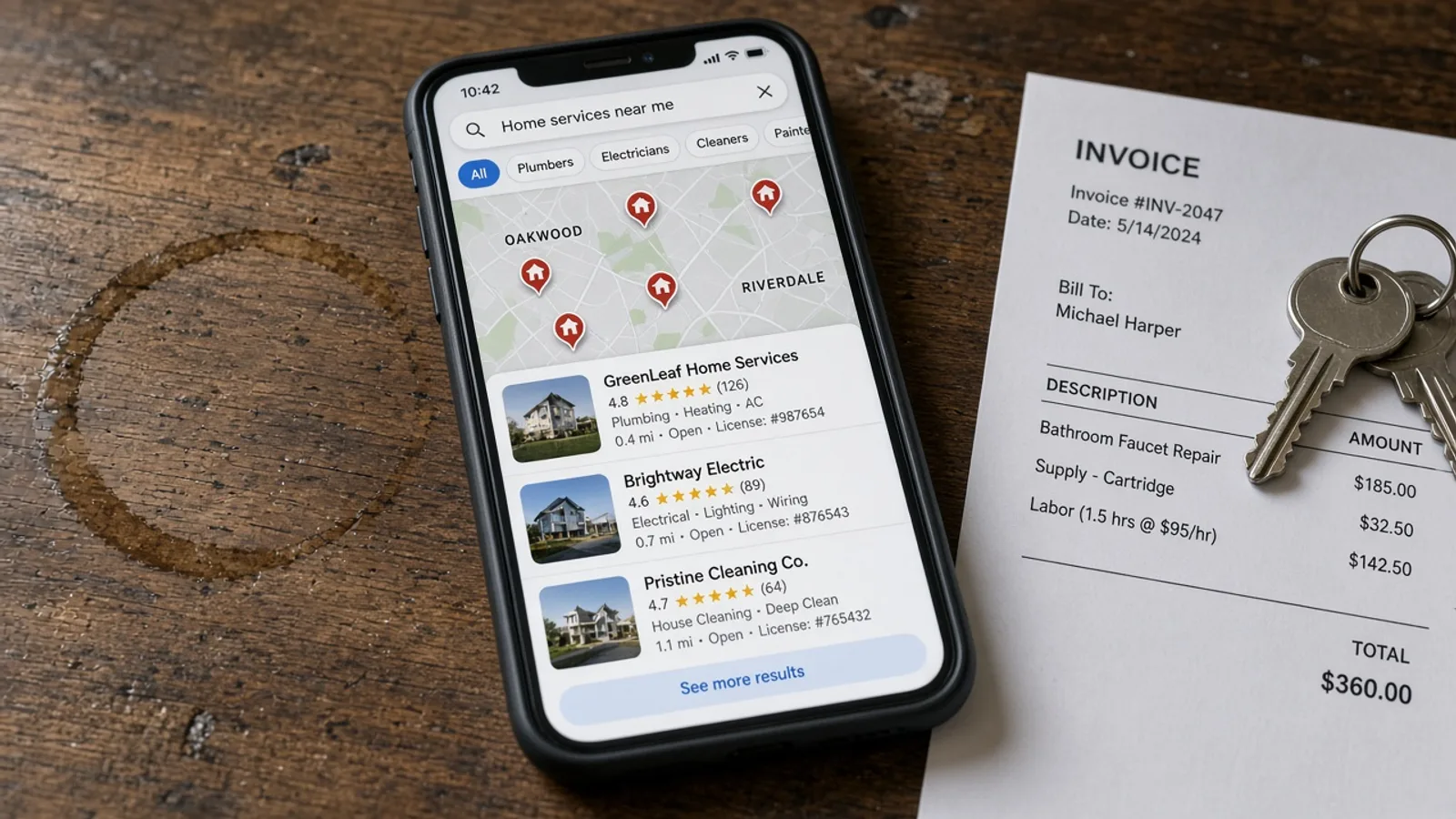
For any homebuilder, local search is where the money is. When a family is finally ready to build their dream home, they don't start by flipping through a phone book. They go straight to Google and type in things like "custom home builder in Dallas" or "new construction homes near me."

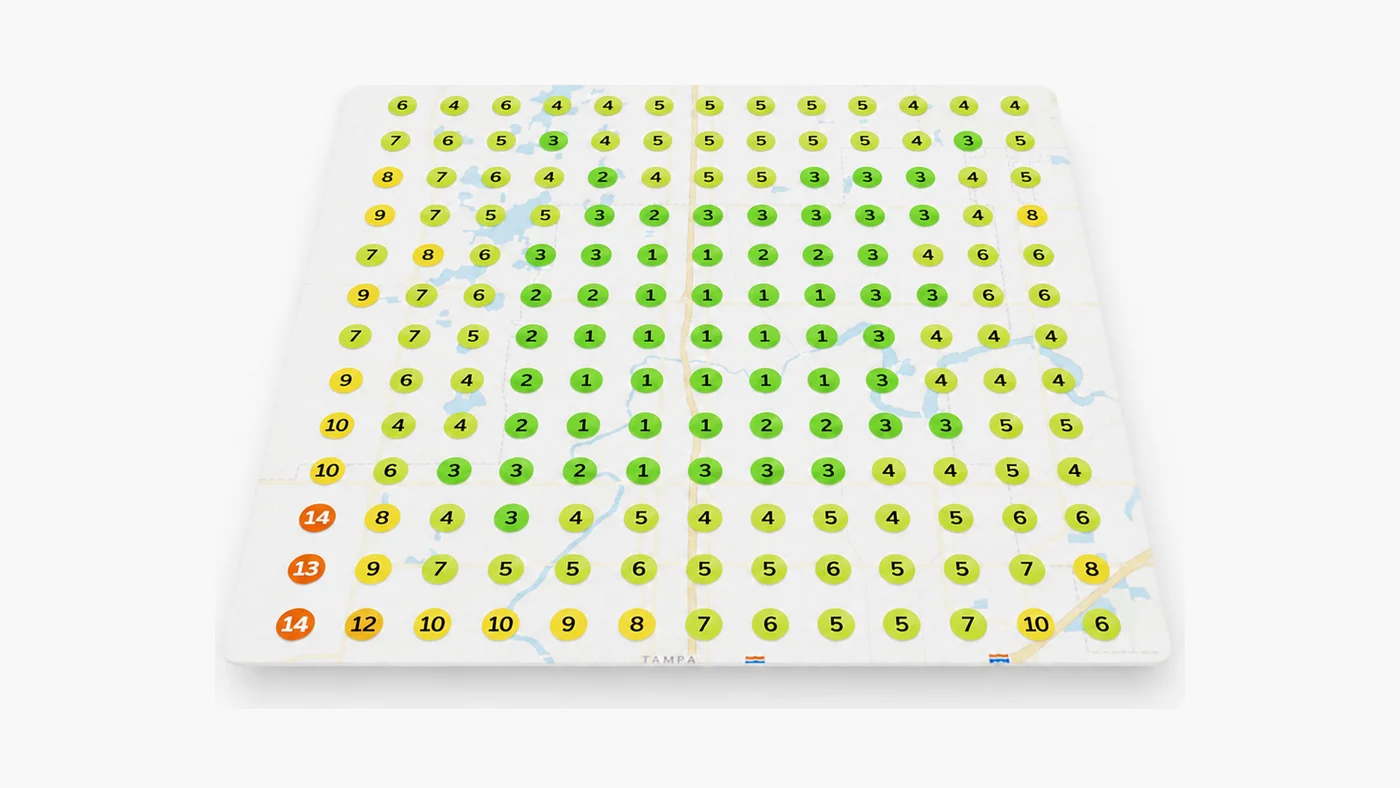
This is where your most valuable digital real estate comes into play: the Google Map Pack. That’s the block of three businesses staring back at them from the top of the search results.

Landing a spot in the Map Pack is like having the best model home on the busiest street in every single community you serve. It's not just about getting seen; it’s about instant credibility. Your Google Business Profile (GBP) is the blueprint for getting there, and ignoring it is like building a masterpiece and forgetting to put a sign out front.

Think of your GBP as a mini-website that lives directly on Google, giving high-intent buyers everything they need to pick up the phone and call you. It's the single most powerful tool in your local marketing arsenal.

Nailing the Blueprint: GBP Foundation and Optimization

An incomplete or sloppy Google Business Profile is a huge red flag—not just for Google, but for the discerning clients you want to attract. The first step is to treat your profile with the same obsessive attention to detail you give a new floor plan.

Start by claiming and verifying your business. From there, it's all about optimization. This isn't a one-and-done task you can check off a list. It’s an ongoing project that directly determines how often you show up in front of people ready to sign a contract.

These are the absolute non-negotiables for your profile:

  • Business Name: This must be your exact, legal business name. Don't get clever and stuff it with keywords like "Dallas's Best Home Builder." That's a fast track to getting your profile penalized by Google.
  • Categories: Precision is key. Your primary category should be "Home Builder." Then, add secondary categories that truly reflect your work, like "Custom Home Builder," "Luxury Home Builder," or "Design-Build."
  • Service Area: This is critical. Clearly list the specific cities, counties, and even zip codes you serve. This tells Google exactly where you operate, making sure you appear in searches within your actual target markets.
  • Hours & Contact Info: Double-check that your hours, phone number, and website are 100% accurate and match what’s on your website. Consistency across the web is a major trust signal for Google.

Building Authority: Activity Is the New Currency

Once your foundation is solid, the real work begins. Google’s algorithm loves activity. It rewards profiles that are active, engaging, and consistently updated. A static profile looks abandoned, while an active one tells Google your business is thriving and trusted by the community.

For a homebuilder, a top spot in the Google Map Pack isn't just nice to have—it's essential. This is where 59% of clicks go. A well-maintained GBP, packed with regular updates, can generate 156% more calls. It's a direct line to your bottom line.

Here’s how you keep your profile active and climb the local rankings:

  1. Consistent Photo Uploads: You're in a visual business, so act like it. Regularly upload high-quality, geotagged photos of your finished homes, projects in progress, and your team on-site. Geotagging embeds location data into the image, physically tying your incredible work to the communities you build in.
  2. Google Posts: Use this feature like a micro-blog. Announce a newly completed project, share a video of a groundbreaking, highlight a specific floor plan, or promote an open house. Posts are a direct line of communication to searchers and a massive signal of activity to Google.
  3. Customer Reviews: Actively ask for and respond to every single review—good or bad. Reviews are one of the most powerful local ranking factors, and your thoughtful responses show potential clients you care about the customer experience long after the keys are handed over.
  4. Q&A Section: Get ahead of your clients' questions. Proactively populate the Q&A section by asking and answering common questions about your building process, financing, timelines, or service areas. This positions you as the expert before they even click to your site.

A dynamic Google Business Profile is a lead-generation powerhouse. It doesn't just improve your rank; it drives high-value actions like phone calls, website visits, and direction requests, turning searchers into scheduled consultations. To dive deeper, check out our complete guide on how to rank higher on Google Maps.

Building Your High-Performance Digital Model Home

A hand holds a smartphone displaying a location pin icon, with a blurred house and 'Local Visibility' text.

Think of your website as your digital model home. It’s open 24/7, and it’s often the very first impression a potential homebuyer has of your entire operation. When they "walk through the door," that experience better be as clean, inviting, and impressive as stepping into one of your finished properties.

This is where your website's "blueprints"—on-page and technical SEO—come into play. They’re the foundation and framing that make sure your site isn't just nice to look at, but is also structurally sound, blazing fast, and simple to navigate.

A beautiful site that takes forever to load or confuses visitors is the digital equivalent of a model home with a stuck front door and no lights on. It doesn't matter how great the interior is; people will just leave. Getting these foundational pieces right signals quality to Google and is non-negotiable for turning search traffic into actual leads.

The Technical SEO Foundation

Technical SEO is all the work that happens behind the walls. It’s the site grading, the concrete pour, and the structural framing of your digital property. You don't always see it, but you absolutely feel the consequences when it’s done poorly.

It covers all the behind-the-scenes guts that dictate performance, security, and how easily search engines can crawl your site.

Key elements here are non-negotiable:

  • Site Speed (Core Web Vitals): This is Google’s report card on how fast your site loads and responds. A slow website is the number one reason people hit the back button.
  • Mobile-First Design: Your website has to look and work perfectly on a smartphone. It's not a "nice-to-have"; it's a requirement.
  • HTTPS Security: A secure site (the one with the padlock and https:// in the URL) protects your visitors' data and is a confirmed ranking factor for Google.

The numbers don't lie. A massive 63% of all construction-related website visits now happen on a mobile phone. Yet, a shocking 23% of real estate sites actually pass Google's Core Web Vitals speed tests. This is a huge opportunity. Get your technical house in order, and you’re already ahead of the pack, especially when secure HTTPS sites are known to attract 17% more organic traffic. You can see even more data in the latest homebuilder advertising benchmarks.

Optimizing Your On-Page Content

If technical SEO is the foundation and framing, on-page SEO is the interior design, the staging, and the clear signage that guides people through your model home. It’s how you strategically arrange every page to tell a story to both homebuyers and Google.

Every single page on your site—from your homepage down to a specific floor plan—is a new chance to connect with a buyer. This involves much more than just dropping in a few keywords.

A great website not only attracts visitors but converts them. Your site should be built to capture leads, and effective on-page SEO is the key. Find out more in our detailed guide on creating a high-converting home service website.

Here’s a practical checklist for dialing in the most critical on-page elements:

  1. Locally-Focused Title Tags: The title tag is the big blue link people see in Google search results. It has to be compelling and must include your main keyword and location. Think: “Luxury Custom Home Builder in Scottsdale, AZ | Your Company Name.”
  2. Compelling Meta Descriptions: This is the little sales pitch under the title. It doesn't directly help you rank, but a great one convinces a searcher to click your link instead of your competitor’s. Make it count.
  3. Clear Heading Structure (H1, H2, H3): Headings break up your content into a logical flow, just like chapters in a book. Your main page topic gets an H1 tag. Sub-topics get H2s and H3s. This makes the page easy for people to skim and helps Google instantly understand what it's about.
  4. Optimized Body Content: Weave your target keywords and related phrases into your text, but do it naturally. The goal isn't to stuff keywords; it's to write genuinely helpful content that answers a homebuyer’s questions about your process, your communities, and your homes.
  5. Clear Calls-to-Action (CTAs): Don't leave a visitor wondering what to do next. Every page needs a clear next step. Whether it’s “Schedule a Tour,” “View Available Homes,” or “Download a Brochure,” your CTAs should be impossible to miss.

Creating Content That Attracts and Converts Homebuyers

Devices display a modern house website and performance gauges indicating a 'High Performance Site'.

If your website is your digital model home, then your content is the expert guide showing people around. But let's be honest—most builder content is terrible. It's generic, boring, and does nothing to answer the real questions that keep a potential client up at night.

Great content does the heavy lifting. It builds trust, answers questions before they’re even asked, and pulls a qualified homebuyer closer to picking up the phone and calling you. A real content strategy is the engine of your SEO for homebuilders plan, making sure you connect with clients whether they’re just dreaming or ready to break ground.

This means you have to stop writing generic blog posts about "spring color palettes." Your content needs to be a tactical tool, targeting the very specific questions people are typing into Google when they look to build a home in your town. It’s about creating digital assets that don't just get clicks, but prove you’re the only builder they should be talking to.

Your prospects are asking Google things like, "best family neighborhoods in [Your County]" or "cost to build a custom home in [Your City]". Your only job is to be the one who shows up with the most thorough, authoritative answer.

Build Your Content Pillars

Instead of chasing every shiny new idea, focus your energy on two high-impact "content pillars." These are massive, foundational pages on your website that you can build an entire strategy around. For a homebuilder, nothing works better than Community Pages and Project Galleries.

These aren't just pages; they are hubs of expertise that directly target the high-intent local searches that lead to actual clients.

  • Community Pages: A dedicated, in-depth guide for every single city, county, or major neighborhood you build in.
  • Project Galleries & Virtual Tours: A visual library of your work, with each project optimized to be found in search engines.

Get these two pillars right, and you'll have a content machine that works for you 24/7, pulling in the exact kind of local traffic you want.

Master Community Pages to Dominate Local Search

A Community Page isn't a short paragraph about the local school and a link to the city's website. That’s what your competitors do. This is your chance to prove you don't just build in a community—you are an expert on it. For a family considering a move or a local choosing a new part of town, this information is pure gold.

A winning Community Page needs to be a one-stop resource. It should include:

  • Real Local Intel: Break down the school districts, property tax rates, main commuter routes, and local hotspots. Be the insider.
  • Your Local Footprint: Showcase the homes you've built in that specific area. Add photos, testimonials from those homeowners, and case studies.
  • What's Available: Feature available lots you have access to or specific floor plans that are popular in that community. Give them a clear next step.
  • Hyper-Local Keywords: Naturally weave in the exact phrases people search for, like "new construction homes in [City]" or "custom home builders in [Neighborhood Name]."

Your Community Page should be so good that it’s the single best online resource for anyone thinking about building a home in that location. When you hit that mark, Google takes notice and rewards you with top rankings for the searches that matter.

Showcase Your Work with SEO-Driven Project Galleries

You're in a visual business. But if your project gallery is just a slideshow of pretty pictures, you're leaving money on the table. When you optimize it correctly, your portfolio becomes a lead-generation machine, attracting buyers who are looking for the exact style of home you build.

Stop lumping all your photos together. Every single project deserves its own dedicated page. Think of each one as a story—a case study that sells.

Project Page Best Practices:

  1. Use a Searchable Title: Don't use "Project #47." Use "Modern Farmhouse Custom Build in Franklin, TN." This immediately targets a buyer searching for exactly that.
  2. Tell the Story: Write a detailed description. What was the client's vision? What unique materials did you use? What challenges did you solve? Give it some personality and prove your expertise.
  3. Optimize Every Image: Before you upload, name your image files with keywords (e.g., modern-farmhouse-kitchen-franklin-tn.jpg). Then, use descriptive alt text for each one. This is how your work gets found in Google Image Search.
  4. Embed Virtual Tours: Tools like Matterport let you create immersive 3D walkthroughs. They keep visitors glued to your site, which sends a massive positive signal to Google, boosting your rankings.

Beyond the visuals, learning to write compelling real estate descriptions that stir emotion and highlight the lifestyle is a non-negotiable skill. The text needs to work with your photos, painting a picture so vivid the client can already see themselves living there. When you turn your portfolio into a library of searchable stories, you create dozens of new doorways for the right clients to walk right through.

Earning Digital Authority with Local Links and Citations

Think of your off-page SEO strategy as building a rock-solid reputation around town. In the real world, you earn trust through quality construction, community relationships, and word-of-mouth. Online, Google measures this exact same kind of trust through two key signals: local backlinks and citations.

These are the digital "votes of confidence" that tell search engines you’re a legitimate, respected, and active homebuilder in the local market. A builder with a strong network of these signals is viewed as more authoritative. That authority translates directly into higher search rankings.

Building Trust with Local Backlinks

A backlink is just a link from another website to yours. Simple enough. But for a homebuilder, not all links are created equal. A single link from your local Home Builders Association is worth more than a hundred random links from sites that have nothing to do with your business. Google gets the context.

Think of each local backlink as a referral. When a respected local entity—like a major building supplier, an architectural firm, or a community organization—links to your website, they are vouching for you. It tells Google you’re a real player in the local industry.

Here's where to start gathering these high-value referrals:

  • Local Business Associations: Get your business listed in the directories of your local Chamber of Commerce, Home Builders Association (HBA), and other industry groups. Make sure your profile has a link pointing back to your website.
  • Supplier & Partner Relationships: Ask your go-to lumber suppliers, architects, designers, and subcontractors if they have a partners page where they can feature you. This is a two-way street; offer to do the same for them.
  • Sponsorships and Events: Sponsoring a local charity run, a youth sports team, or a community festival? Make sure part of that deal is a link from their website to yours. It’s an easy win that also generates genuine community goodwill.

The goal is to weave a web of local connections that proves your deep integration into the community. Each link reinforces your geographic relevance and builds the kind of digital authority Google loves to see.

The Critical Role of NAP Consistency

While backlinks are powerful endorsements, citations are the very foundation of your online reputation. A citation is any mention of your business's Name, Address, and Phone number—your NAP.

These pop up everywhere, from major platforms like Yelp, Angi, and Houzz to dozens of smaller, industry-specific directories. Think about it this way: if your business address was listed differently on the city permit, the property deed, and the utility bill, it would create chaos and raise major red flags.

The same exact thing happens online.

Inconsistencies in your NAP data—an old office address, a disconnected phone number, or a slight variation in your business name ("ABC Homes Inc." vs. "ABC Homes")—destroy Google's confidence. It creates doubt, and that doubt causes your local search rankings to plummet.

Absolute consistency is non-negotiable. This is why managing your reviews and business information on these platforms is so crucial; you can learn more about the role of reviews in local SEO in our dedicated guide.

Your primary job is to ensure your NAP is 100% identical across every single directory, social media profile, and website where your business appears. A perfectly consistent citation profile is the bedrock of any successful SEO for homebuilders strategy, cementing your place on the map and helping you dominate local search.

Measuring What Matters: Proving Your SEO ROI

An SEO strategy that doesn’t end with a signed contract is just a hobby. For homebuilders, the entire point of ranking on Google is to fill your pipeline with serious, qualified buyers. But how do you prove it’s working?

Forget vanity metrics like website traffic or "time on page." Those numbers feel good, but they don't pay the bills. Your success isn't measured in clicks; it's measured in real-world actions that lead to a sale.

We need to shift the focus to what a future homeowner actually does. Are they calling your sales office? Requesting directions to a model home? Filling out your consultation form? These are the signals that matter. These are the Key Performance Indicators (KPIs) that connect your digital marketing directly to your bottom line.

From Digital Signals to Bottom-Line Results

To measure what matters, you need the right tools, and you need them to talk to each other. Google Analytics 4 (GA4) is your starting point, but it can’t tell the whole story on its own. The real magic happens when you connect online activity to offline conversions—and for that, call tracking is non-negotiable.

  • Google Analytics 4 (GA4): This is where you track crucial website interactions. We set up "conversion events" to count how many people take a specific action, like submitting a form or clicking to watch a virtual tour. It tells you what happened on your site.
  • Call Tracking Software: This technology assigns unique, trackable phone numbers to your marketing efforts. It shows you exactly how many phone calls came from someone who found you through a Google search. This gives you undeniable proof of your SEO's direct impact.

When you integrate these tools, you can finally connect the dots.

You can see the exact path: a user searches "custom home builder in [Your City]," lands on your community page, spends five minutes browsing a project gallery, and then picks up the phone. That’s not just a lead; that’s revenue attribution.

You can’t improve what you don’t measure. Tracking tangible outcomes like phone calls, form fills, and direction requests provides a clear, data-backed view of your SEO performance, enabling you to make smarter decisions and prove the value of your marketing investment.

Calculating Your True Return on Investment

Once you're tracking the right metrics, calculating your return on investment (ROI) isn't complicated. This is the framework that turns marketing data into a powerful business case, showing exactly how much revenue your SEO is generating.

Here’s a simple way to break it down:

  1. Track Qualified Leads: Tally the total number of phone calls and form submissions that came from organic search over a specific period (like one quarter).
  2. Determine Your Lead-to-Sale Rate: Look at your sales data. What percentage of those qualified leads actually signed a contract to build a home?
  3. Calculate Total SEO-Driven Revenue: Multiply the number of new homes sold by your average contract value.
  4. Compute Your ROI: Now, just plug the numbers into this formula: [(SEO-Driven Revenue - SEO Investment) / SEO Investment] x 100.

Let's run a real-world example. Say your SEO for homebuilders investment is $15,000 for the quarter. In that time, it generates two new home builds at an average value of $500,000 each. That's $1,000,000 in new revenue.

Your ROI is a staggering 6,566%.

This is the kind of hard data that gives you the confidence to reinvest in what’s working, scale your strategy, and build a predictable engine for growth for years to come.

Frequently Asked Questions About Homebuilder SEO

When it comes to SEO for homebuilders, a lot of the same questions come up again and again. Let's cut right to it and give you some straight, no-nonsense answers based on what we see working in the field.

How Long Does SEO Take to Work?

Everyone wants to know when the phone will start ringing. The honest answer is that SEO is a long game that pays compound interest—it's not a light switch. Meaningful results follow a predictable timeline.

  • Months 1-3: This is the foundation phase. You'll start seeing traction on very specific, long-tail keywords. Think searches like “cost to build modern farmhouse in [Suburb Name].” These are early indicators that the strategy is taking hold.

  • Months 4-6: By this point, a consistent effort should start earning you real estate in the Google Map Pack. You’ll begin ranking for the broader, more valuable terms that signal serious buyer intent.

  • Months 7-12: This is when you can start to truly own your market. The goal here is to lock down the top 3 spots for your most competitive keywords, cementing your status as the go-to builder in your area.

Should I Focus on Local or National SEO?

For a homebuilder, this isn't even a debate. The answer is 100% local SEO. Your customers aren't searching for a builder three states away; they're looking for the best in their city, their county, or their specific suburb.

Ranking for "custom homes" nationally is a great way to burn money on irrelevant website traffic. Ranking for "custom homes in Dallas" is how you get phone calls from qualified buyers who are actually ready to sign a contract in your service area.

Every piece of your strategy—from your website content to your online reviews—should be laser-focused on dominating the search results in the specific communities you build in.

Can I Do SEO Myself or Should I Hire an Agency?

You can absolutely handle some of the basics. Updating your Google Business Profile or posting project photos are great starting points.

But the real question is about opportunity cost. The complexity and sheer time required to run a competitive SEO campaign is a full-time job. A specialized agency brings technical expertise, proven frameworks for homebuilders, and advanced tools that are simply too expensive for a single company to own.

Hiring the right partner frees you up to do what you do best—build incredible homes—while they focus on what they do best: building a predictable pipeline of qualified leads to keep your projects flowing.


Ready to stop guessing and start getting real, measurable results from your marketing? The team at ServiceLine Pro offers a complimentary digital audit and strategy call to show you exactly how to dominate your local market. Book your free strategy call today!


Contact Us for Your Strategy Call

Connect with us

ServiceLine Pro

8770 Huntfield St, Tampa, FL 33635

Tampa, Florida | USA

Mon-Fri, 7:00am  7:00pm EST

Saturday, 11:00am – 5:00pm EST

Sunday, Closed

© 2026 ServiceLine All Rights Reserved | Privacy Policy | Terms & Conditions | Sitemap

Get In Touch
We respond fast
Let's get your info so we can stay connected.
Takes about 30 seconds. No spam, ever.
How can we reach you?
We'll text you, not call you out of nowhere.
🇺🇸
What are you looking for?
Tap everything that applies. Website is optional.
Pay-Per-Rank SEO
Google Ads
Local SEO
Website Design
Full Package
Other
One last thing.
We just need your OK to send a text back.