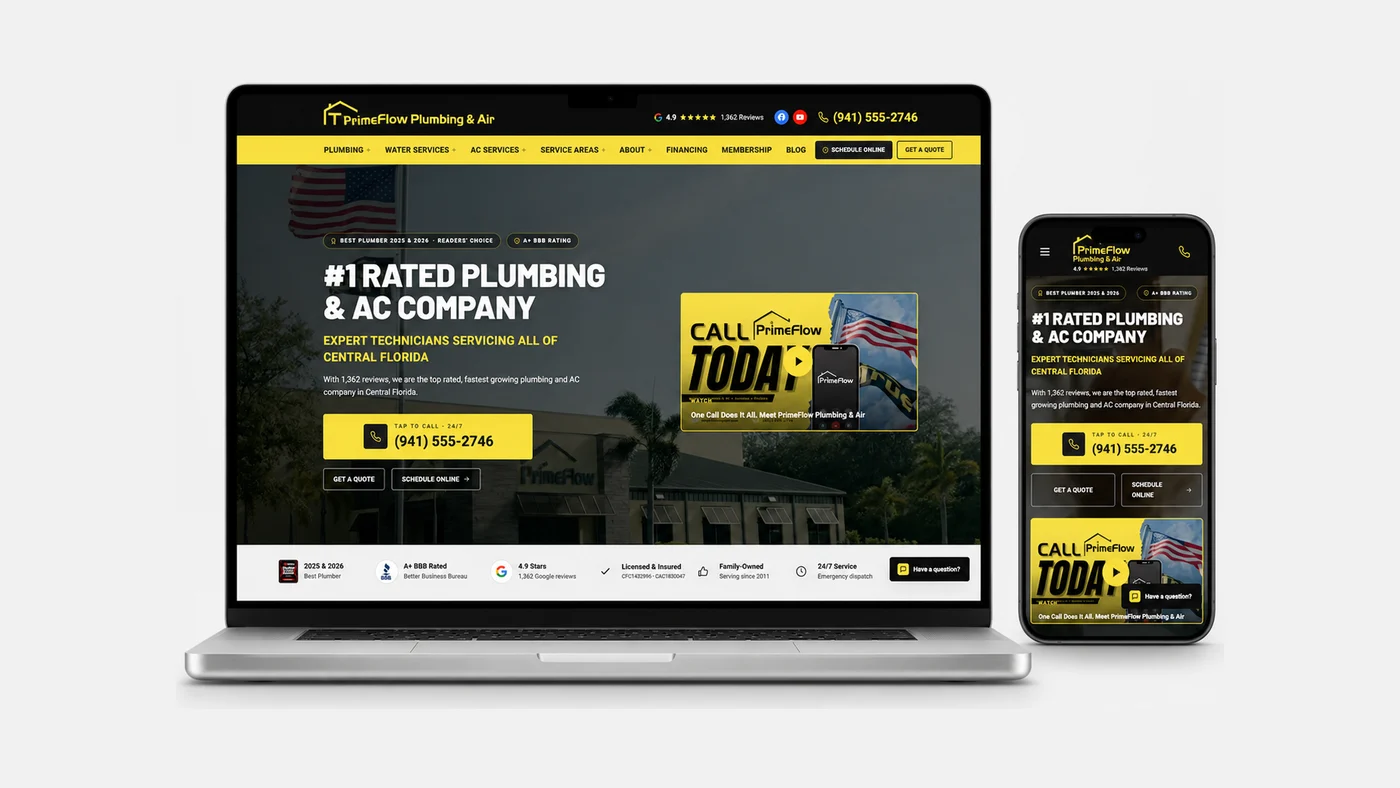
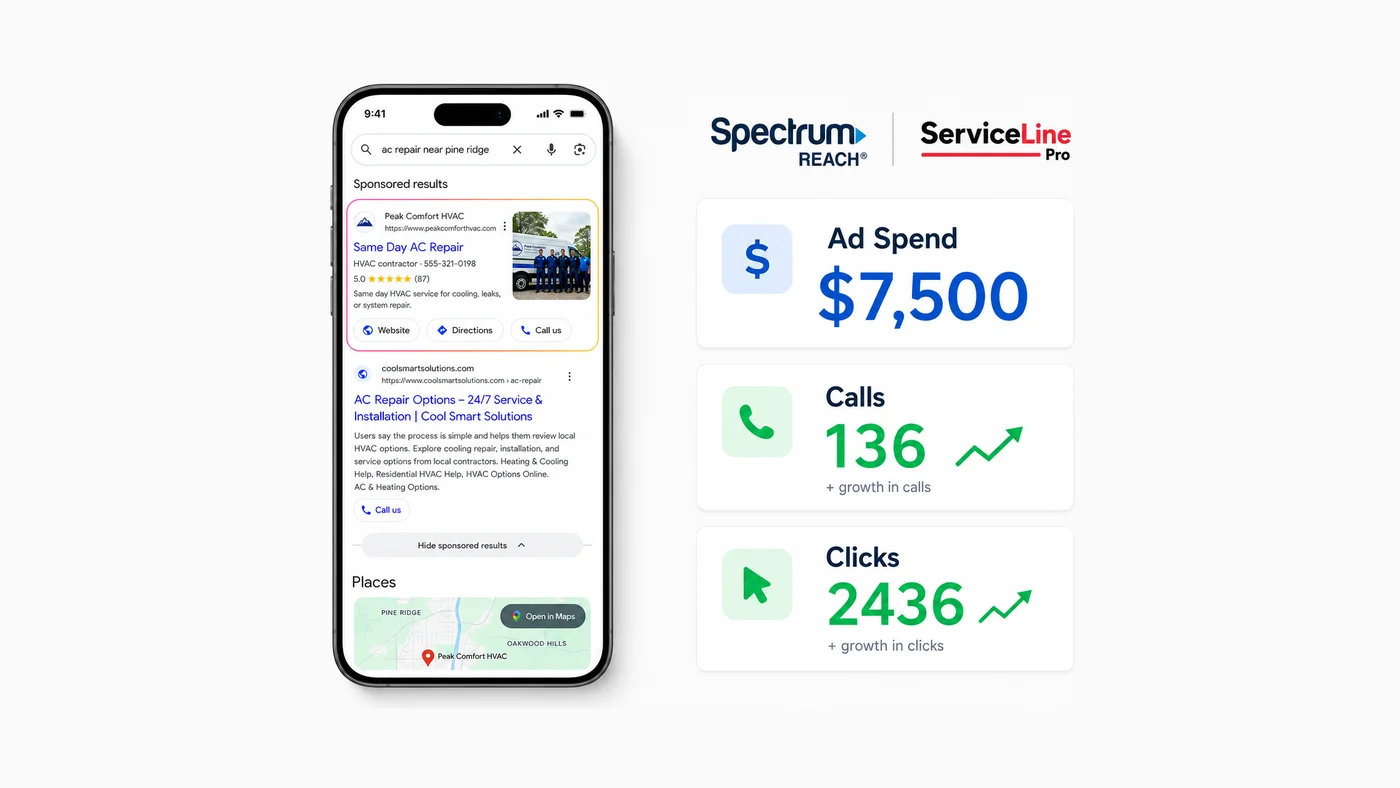
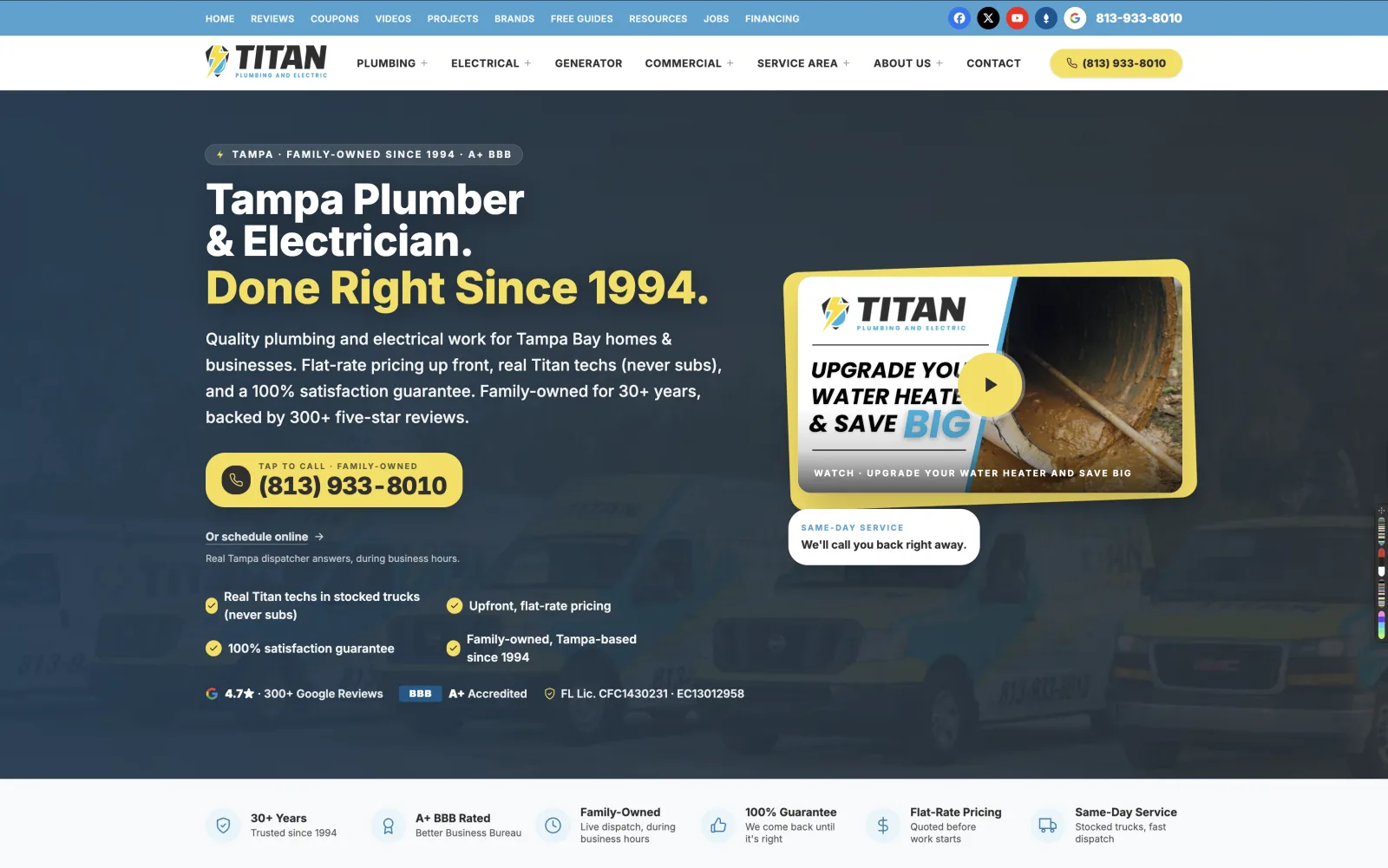





Your website traffic looks great, but phone calls remain flat. The culprit? Your landing pages likely fail to focus visitor attention on taking action. For Florida home service businesses competing in crowded local markets, converting online traffic into qualified leads demands purpose-built landing pages that eliminate distractions and guide prospects toward one clear goal. This guide reveals how optimized landing pages can transform your digital marketing ROI and generate consistent, scalable lead growth.
Table of Contents
- Introduction: Why Landing Pages Are Critical For Home Service Lead Generation
- Why Landing Pages Matter: Conversion Impact And Lead Capture Focus
- Key Elements Of High-Converting Landing Pages For Florida Home Services
- Local Market Customization And Personalization
- Form Optimization To Maximize Lead Capture
- Advanced Optimization And AI Integration
- Common Misconceptions About Landing Pages And How To Avoid Them
- Conclusion: Leveraging Landing Pages For Scalable Local Growth
- Ready To Boost Your Florida Home Service Leads?
Key takeaways
| Point | Details |
|---|---|
| Single goal focus | Landing pages concentrate visitor attention on one call to action, dramatically improving conversion rates over multi-purpose website pages. |
| Message alignment matters | Matching landing page content with ad messaging builds trust and reduces bounce rates, increasing qualified lead capture. |
| Local customization wins | Incorporating Florida-specific keywords, neighborhoods, and trust signals enhances search visibility and prospect engagement. |
| Form simplicity converts | Reducing form fields and using multi-step designs lowers friction, improving completion rates and lead volume. |
| AI drives optimization | Automated testing and personalization can lift conversion rates by 20% through continuous performance improvements. |
Introduction: why landing pages are critical for home service lead generation
Landing pages differ fundamentally from homepages in purpose and design. While your homepage serves multiple audiences and objectives, a landing page zeroes in on one specific action: capturing leads from visitors who clicked your ads or searched for your services. For Florida home service businesses, this focused approach matters because you compete against hundreds of local providers fighting for the same customers.
The primary challenge in home services isn’t generating traffic. It’s converting that traffic into paying customers. Traditional websites scatter visitor attention across navigation menus, blog links, and service descriptions. Landing pages remove these distractions entirely.
Consider these key differences:
- Purpose: Landing pages convert traffic to leads; homepages inform and navigate
- Focus: Single call to action vs. multiple pathways
- Design: Minimal navigation vs. full site menus
- Intent: Capture contact info vs. educate broadly
Home service businesses face unique lead generation hurdles. Local trust matters immensely when someone needs emergency repairs or major installations. Lead quality varies wildly, and you can’t afford wasting time quoting tire kickers. Landing pages focus visitor attention on a single call to action, which dramatically improves conversion outcomes. By removing exit routes and emphasizing your specific service offer, you guide qualified prospects toward requesting estimates. This focused approach integrates naturally with Google Local Services advertising to maximize your marketing investment.
Why landing pages matter: conversion impact and lead capture focus
Numbers tell the conversion story clearly. Generic website pages typically convert 2 to 3 percent of visitors into leads. Well-optimized landing pages consistently achieve 8-10% conversion rates, delivering three to four times better results from identical traffic volumes. For a Florida HVAC company spending $3,000 monthly on Google Ads, this difference means 24 leads instead of 8.

The performance gap stems from psychological principles. When visitors click an ad promising “emergency plumbing repair in Tampa,” they expect the landing page to deliver exactly that message. Any deviation creates doubt. Navigation menus invite distraction. Multiple CTAs force choices that stall decisions.
Message match between your ad and landing page determines whether visitors stay or bounce. If your ad highlights 24-hour service but your landing page leads with financing options, you’ve broken the mental contract. Prospects leave immediately.
“Conversion rate optimization isn’t about tricks. It’s about removing every obstacle between your visitor’s problem and your solution. Landing pages eliminate the noise.”
Here’s how focused pages outperform:
| Metric | Traditional Website Page | Optimized Landing Page | Improvement |
|---|---|---|---|
| Average Conversion Rate | 2.5% | 9.0% | 260% |
| Visitor Retention | 45 seconds | 2.3 minutes | 206% |
| Form Completions | 18% of engaged visitors | 47% of engaged visitors | 161% |
| Cost Per Lead | $125 | $42 | 66% reduction |
These improvements compound dramatically at scale. A roofing contractor generating 50 leads monthly through optimized ad campaigns could realistically reach 150 leads with the same budget by implementing dedicated landing pages. That’s two additional crews worth of work from marketing dollars already being spent.
Revenue potential grows proportionally. If your average job value is $2,800 and you close 30% of leads, tripling lead volume means an extra $84,000 monthly. The math becomes impossible to ignore.
Key elements of high-converting landing pages for Florida home services
Building landing pages that actually convert requires specific design and content decisions. Start by ensuring your headline mirrors your ad copy precisely. If someone clicked “Same-Day AC Repair Fort Myers,” those exact words should appear prominently above the fold.

Remove all navigation menus. This feels counterintuitive, but every link represents an escape route from your conversion goal. Visitors should face one choice: complete your form or leave. Studies show removing navigation increases conversions by eliminating decision paralysis.
Your call to action must dominate visually and communicate clear benefits:
- Use contrasting button colors that pop against your background
- Write action-oriented copy: “Get My Free Estimate” beats “Submit”
- Place CTAs above the fold and repeat after key benefit sections
- Make phone numbers clickable on mobile with large tap targets
Localizing content builds immediate trust and relevance. Generic landing pages fail because Florida homeowners want proof you serve their specific area. Include:
- Neighborhood names in headlines: “Trusted Plumber in Coral Gables”
- Local landmarks: “Serving homes near Bayside Marketplace since 2018”
- Florida-specific services: “Hurricane-rated impact windows”
- Area codes in phone numbers matching the prospect’s location
Pro Tip: Test your CTA button color against your brand palette. Orange and green buttons often outperform blue, but your audience may respond differently. Run split tests for two weeks to find your winner.
Benefit-driven content outperforms feature lists every time. Don’t just list that you offer 24-hour service. Explain what that means: “Water damage spreads every minute. Our Tampa team arrives within 60 minutes, day or night, to stop leaks before they destroy your home.” Paint the picture of resolution, not just service availability.
Local market customization and personalization
Florida’s home service market spans diverse communities with distinct needs and preferences. A landing page converting well in Miami may flop in Jacksonville without localization. Geographic customization transforms generic pages into relevant, trustworthy resources that drive qualified leads.
Start by incorporating specific location signals throughout your content. Reference recognizable landmarks, neighborhoods, and local concerns. A Tampa HVAC company should mention humidity challenges unique to Gulf Coast living. A Fort Lauderdale roofer can highlight hurricane preparedness.
Local SEO benefits compound when landing pages target specific service areas. Search engines rank pages higher when content demonstrates genuine local relevance. Include:
- City and neighborhood names in headlines and body copy
- Schema markup identifying your service area
- Embedded Google Maps showing your coverage zone
- Local business listings and certifications
Trust signals matter enormously in home services. Prospects invite you into their homes and hand over substantial money. Localized testimonials prove you’ve successfully served neighbors:
- Feature reviews mentioning specific Florida locations
- Display photos of completed jobs in recognizable areas
- Highlight Florida-specific licenses and certifications
- Show membership in local business associations
Compare the impact:
| Element | Generic Content | Localized Content | Impact on Relevance |
|---|---|---|---|
| Headline | “Professional Plumbing Services” | “Emergency Plumber Serving Boca Raton & Delray Beach” | 340% more clicks |
| Trust Signal | “Licensed and Insured” | “Florida Master Plumber License #CFC1234567” | 180% higher trust |
| Social Proof | “500+ Happy Customers” | “Trusted by 500+ Palm Beach County Homeowners” | 215% better conversion |
| Service Description | “Fast Emergency Response” | “Serving Wellington, Royal Palm Beach, and Greenacres 24/7” | 270% more engagement |
Google Local Services Ads perform significantly better when paired with localized landing pages. The consistency reinforces your local presence and builds confidence. Combined with proven local SEO strategies, geographic customization creates a powerful lead generation system that competitors struggle to match.
Form optimization to maximize lead capture
Your landing page can nail every element perfectly, but a poorly designed form kills conversions instantly. The moment someone decides to request information, friction at the form stage sends them elsewhere. Long, complex forms increase abandonment rates dramatically, costing you hard-won leads.
Every field you add decreases completion rates by roughly 10%. A form requesting name, email, phone, address, service needed, and preferred date might seem reasonable. But you’ve just created six decision points and six opportunities for the visitor to quit. Pare ruthlessly to essentials.
Follow this optimization sequence:
- Limit initial fields to name, phone, and zip code only
- Implement multi-step forms that feel less overwhelming
- Add autosave functionality so partially completed forms survive page refreshes
- Use smart defaults and dropdown menus to reduce typing
- Clearly communicate what happens after submission
- Test one-column layouts against two-column designs
- Enable mobile-optimized input fields with appropriate keyboards
Multi-step forms deserve special attention. Breaking a seven-field form into two or three screens paradoxically increases completions. The first step asks for basic contact info. Step two requests service details. This approach works because:
- Initial commitment feels smaller and easier
- Progress indicators motivate completion
- Sunk cost bias kicks in after the first screen
- Each step can be tailored and optimized independently
Conditional logic refines lead quality without adding visible complexity. If someone selects “emergency repair” from a service dropdown, your form can automatically show a field for immediate callback. Non-emergency requests skip that field entirely. You gather relevant information without bombarding everyone with every possible question.
Pro Tip: Use conditional fields to capture more detailed information progressively. After someone provides basic contact info, show relevant follow-up questions based on their service selection. This balances lead quality with form simplicity.
Mobile optimization cannot be optional in 2026. Over 65% of home service searches happen on phones, often during emergencies. Test your forms on actual devices. Ensure:
- Buttons are large enough for thumbs
- Input fields trigger appropriate keyboards
- Forms work in both portrait and landscape
- Error messages appear clearly without requiring scrolling
Advanced optimization and AI integration
Basic landing page optimization delivers strong results, but advanced techniques unlock additional performance gains. AI-powered tools now enable continuous testing and personalization that were impossible just a few years ago. AI-driven optimization tools lead to an average 20% increase in landing page conversion rates for lead generation.
Traditional A/B testing requires manual setup, monitoring, and analysis. You test headline A against headline B for two weeks, declare a winner, then start testing the next element. AI accelerates this cycle dramatically by testing multiple variables simultaneously and automatically shifting traffic toward better-performing variations.
Practical AI techniques for home service landing pages include:
- Dynamic headline testing that rotates variations based on traffic source
- Personalized content blocks showing different benefits to different visitor segments
- Predictive lead scoring that prioritizes follow-up on highest-value prospects
- Automated form field optimization adjusting based on completion patterns
- Smart traffic allocation sending visitors to their most likely converting page variation
Personalization extends beyond simple name insertion. Modern tools analyze visitor behavior, location, device, time of day, and referral source to display customized content. A mobile visitor from Miami arriving at 11 PM might see emergency service messaging, while a desktop user from Orlando browsing at 2 PM sees standard service descriptions.
“The future of landing page optimization isn’t about finding one perfect version. It’s about delivering the right version to each visitor automatically. AI makes that scalable.”
Implementing SEO strategies systematically creates data foundations that AI tools use for optimization. The more visitor and conversion data you collect, the smarter your automation becomes. Start with basic analytics, then layer in advanced tools as your traffic and lead volume grow.
Automation also improves lead quality through better matching. By analyzing which visitor characteristics predict closed deals, AI can adjust forms and messaging to attract more qualified prospects while discouraging poor-fit leads. This refinement happens continuously without manual intervention.
Common misconceptions about landing pages and how to avoid them
Several persistent myths undermine landing page effectiveness for Florida home service businesses. Correcting these misunderstandings immediately improves results and prevents wasted effort on counterproductive tactics.
Misconception 1: Landing pages are just simplified homepages. Many business owners create landing pages by removing navigation from their homepage and calling it done. Real landing pages focus entirely on one conversion goal. They tell a single story leading to one action. Your homepage serves multiple purposes; your landing page serves one. Design and content should reflect this laser focus.
Misconception 2: More form fields capture better leads. The logic seems sound: gathering detailed information upfront filters out unqualified prospects. Reality works oppositely. Longer forms reduce completions so drastically that you end up with fewer total leads and fewer qualified ones. Better to capture basic info and qualify during your callback. Ask for name, phone, and service type only.
Misconception 3: Your homepage converts as well as dedicated landing pages. This belief costs businesses thousands in wasted ad spend monthly. Homepages present choices: learn about services, read the blog, check pricing, meet the team. Landing pages eliminate choices. Every element supports one goal. The conversion difference isn’t marginal; it’s transformational.
Key corrections:
- Design landing pages around single offers, not company overviews
- Minimize form fields ruthlessly, qualifying leads post-submission
- Remove all navigation and links that don’t support conversion
- Match landing page messaging exactly to the ad or link that brought visitors
- Test and optimize continuously rather than setting and forgetting
Pro Tip: Audit your landing pages quarterly using fresh eyes. Review each element and ask: “Does this directly support getting the visitor to complete the form?” Remove everything that doesn’t pass this test.
Another common error treats all traffic sources identically. Visitors from Google Ads, organic search, and social media arrive with different intent levels and information needs. Create separate landing pages tailored to each source. Someone clicking a paid ad is ready to act; someone from a blog post needs more education first.
Conclusion: leveraging landing pages for scalable local growth
Focused landing pages represent the difference between spinning your wheels and building sustainable lead generation systems. For Florida home service businesses competing in saturated markets, conversion optimization delivers immediate ROI improvements without increasing ad spend. The strategies outlined here work because they align with how prospects actually make decisions.
Prioritize message match between your ads and landing pages first. This single change often lifts conversions 40% or more. Simplify forms aggressively, removing any field that isn’t absolutely essential for initial contact. Add localized trust signals proving you serve the prospect’s specific area successfully. These three tactics form your optimization foundation.
Measure everything rigorously. Track conversion rates by traffic source, device type, and landing page variation. What works in Tampa may need adjustment for Jacksonville. Mobile visitors behave differently than desktop users. Let data guide your decisions rather than assumptions. When you find winning combinations, implement systematic SEO strategies that scale those successes across your marketing.
Remember that optimization never ends. Markets shift, competitors adjust, and customer preferences evolve. Commit to ongoing testing and refinement. Even small improvements compound dramatically over time. A 2% conversion increase might seem minor until you calculate the annual revenue impact.
Your Florida home service business can dominate your local market through superior lead generation. Landing pages provide the conversion engine that transforms traffic into revenue predictably and scalably.
Ready to boost your Florida home service leads?
Implementing high-converting landing pages requires expertise in design, copywriting, local SEO, and continuous optimization. ServiceLinePro specializes in building complete lead generation systems for Florida home service businesses that combine targeted landing pages with proven advertising strategies. Our performance-based approach means you only pay when results materialize.
We’ve helped contractors, HVAC companies, plumbers, and roofers across Florida triple their qualified leads while reducing cost per acquisition. Our comprehensive local SEO strategies integrate seamlessly with optimized landing pages to dominate your market. Stop leaving money on the table with underperforming websites. Discover how ServiceLinePro can transform your digital marketing into a predictable growth engine.
FAQ
What is the primary advantage of using landing pages for home service lead generation?
Landing pages eliminate distractions by focusing entirely on one conversion goal, unlike multi-purpose websites that scatter visitor attention across navigation menus and multiple calls to action. This singular focus typically delivers three to four times higher conversion rates, turning more of your advertising spend into qualified leads without increasing traffic costs.
How does message match between ads and landing pages affect conversions?
When your landing page headline and content directly mirror your ad messaging, visitors immediately recognize they’ve found what they searched for, building instant trust and reducing bounce rates. This alignment keeps prospects engaged longer and dramatically increases the likelihood they’ll complete your lead capture form. Mismatched messaging creates doubt and sends visitors back to search results.
What form design practices reduce lead capture friction?
Short forms with three to five fields maximum significantly outperform lengthy questionnaires that overwhelm visitors and trigger abandonment. Multi-step forms work even better by breaking the process into manageable screens that feel less demanding. Avoid requesting information you don’t immediately need; you can gather details during your follow-up call after capturing basic contact info.
Why is local customization critical for Florida home service landing pages?
Incorporating specific neighborhood names, local landmarks, and Florida-relevant services proves you genuinely serve the prospect’s area rather than being a generic national provider. This geographic specificity builds trust with homeowners who want local expertise and improves your search engine rankings for location-based queries. Visitors engage more deeply with content that speaks directly to their community and understands their regional needs.