




You spend hundreds on ads each month, yet the phone barely rings. Meanwhile, your competitor down the street lands every HVAC emergency call. What gives? The difference isn’t luck or reputation alone. It’s targeted advertising, a precision marketing approach that places your services directly in front of homeowners actively searching for help. When someone’s furnace dies at 2 AM, they don’t browse Yellow Pages or wait for billboards to inspire them. They Google “emergency HVAC repair near me” and click the first credible result. This article breaks down what targeted advertising is, which platforms deliver the best returns for contractors and HVAC professionals, and how to implement strategies that turn urgent searches into paying customers in 2026.
Table of Contents
- Understanding Targeted Advertising In Home Services
- Comparing Targeted Advertising Platforms For Home Services
- How Optimized Targeting Uses Machine Learning To Find The Best Customers
- Applying Targeted Advertising Strategies For Home Services In 2026
- Grow Your Home Service Business With Expert Digital Marketing
- Frequently Asked Questions
Key takeaways
| Point | Details |
|---|---|
| Precision targeting | Targeted advertising places your ads in front of homeowners based on intent, location, and behavior, not random impressions. |
| Platform strategy | Google Ads dominates search volume while Bing Ads offers 20-30% lower cost per lead, making multi-platform campaigns smart for budget control. |
| Machine learning optimization | Optimized targeting uses conversion data to identify and reach similar high-value audiences automatically, expanding reach beyond manual targeting. |
| Budget discipline | Without careful monitoring, optimized targeting can drain budgets quickly on low-intent audiences, requiring monthly performance reviews. |
| Intent-driven keywords | Focus on urgent, specific search terms like “24-hour plumber” or “AC repair today” to capture homeowners ready to hire immediately. |
Understanding targeted advertising in home services
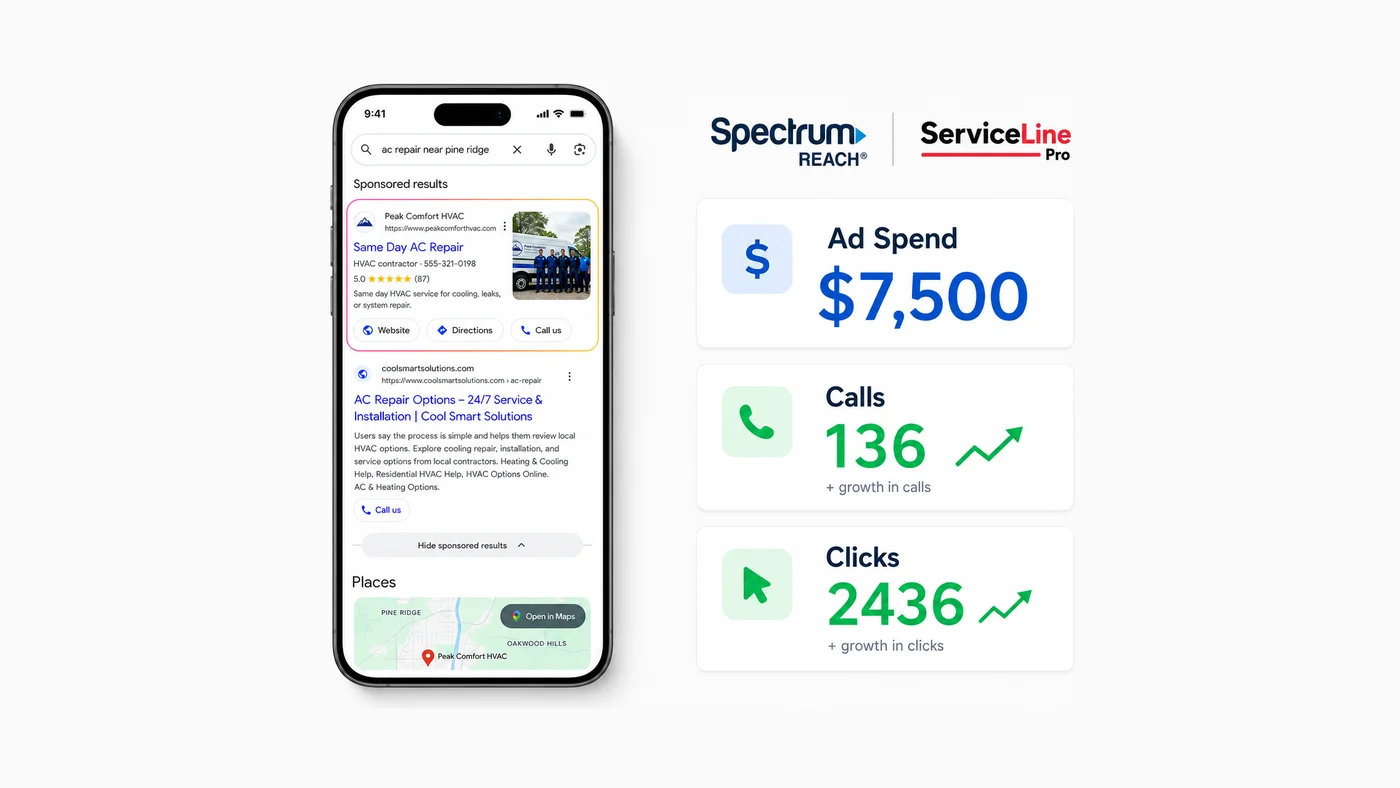
Targeted advertising means placing your ads directly in front of people most likely to become paying customers, based on their search intent, behaviors, demographics, and geographic location. For home service businesses, this precision matters because homeowners don’t casually browse for contractors. They search with urgent intent when their water heater leaks or their AC quits during a heat wave. HVAC PPC advertising allows businesses to bid on search or social inventory, ensuring their offers appear when homeowners or facilities managers need climate control help. You pay only when a prospect clicks your ad, making pay-per-click (PPC) a common and cost-effective form of targeted advertising.
Timing and relevance separate winning campaigns from wasted budgets. When a homeowner types “emergency furnace repair” at midnight, they want immediate solutions, not generic brand awareness. Your ad must appear at that exact moment, in their exact location, with messaging that speaks to their urgency. Generic advertising spreads your message to anyone, anywhere, hoping someone needs your service eventually. Targeted advertising flips this model by identifying people already searching for what you offer and placing your business in their path.
Several targeting methods power this precision for home service marketing local 2026 campaigns:
- Geographic targeting limits ad visibility to specific cities, zip codes, or radius zones around your service area, ensuring you never pay for clicks from homeowners 200 miles away.
- Keyword intent targeting matches your ads to specific search queries like “roof leak repair” or “drain cleaning service,” capturing high-intent prospects ready to hire.
- Device targeting adjusts bids based on whether users search on mobile or desktop, crucial since 70% of emergency service searches happen on smartphones.
- Interest and behavioral targeting reaches people who previously visited home improvement sites, searched for related services, or fit demographic profiles matching your ideal customers.
These methods work together to create campaigns that deliver qualified leads instead of random traffic. You control who sees your ads, when they see them, and how much you spend acquiring each customer.
Comparing targeted advertising platforms for home services
Choosing the right advertising platform directly impacts your cost per lead and overall campaign performance. Google Ads and Bing Ads dominate the search advertising landscape for home services, each offering distinct advantages depending on your budget, market, and growth goals. Understanding their differences helps you allocate dollars strategically and maximize returns.
| Platform | Cost Per Lead | Search Volume | User Demographics | Ad Formats | Best For |
|---|---|---|---|---|---|
| Google Ads | Higher | Dominant market share | Broad age ranges, mobile-heavy | Search, Display, Video, Local Services | Maximum reach, high-intent searches |
| Bing Ads | 20-30% lower | Smaller but valuable | Older, higher income, desktop-heavy | Search, Display | Budget-conscious campaigns, supplemental reach |
Google Ads captures the majority of search traffic, making it essential for home service businesses wanting maximum visibility. When homeowners need urgent help, they overwhelmingly turn to Google first. This dominance comes with competition, driving up costs per click in competitive markets like HVAC and plumbing. However, the volume of high-intent searches justifies the investment for most contractors. Google’s Local Services Ads also connect you directly with homeowners through verified business profiles, adding credibility that generic ads lack.

Bing Ads presents a compelling alternative or supplement to Google. HVAC PPC marketing campaigns on Bing often have a cost per lead that is 20-30% lower than Google, thanks to less competition and different user demographics. Bing users tend to be older, wealthier, and more likely to own homes, making them ideal prospects for premium home services. While Bing’s search volume is smaller, the quality of leads can match or exceed Google’s at a fraction of the cost.
Using both platforms strategically maximizes reach while controlling costs. Start with Google to capture the largest audience, then layer in Bing to access cheaper leads without sacrificing quality. How Google Ads work guide Florida home services 2026 campaigns can run simultaneously with Bing efforts, each optimized for their unique audience characteristics. Monitor performance weekly to identify which platform delivers better returns for specific services or geographic areas.
Pro Tip: Set a separate budget for Bing Ads starting at 20% of your Google spend, then adjust based on lead quality and conversion rates after 30 days of data collection.
How optimized targeting uses machine learning to find the best customers
Optimized targeting represents a significant evolution in digital advertising, using machine learning algorithms to analyze your existing conversion data and automatically expand your audience to similar high-value prospects. Instead of manually selecting demographics or interests, you let Google’s AI identify patterns in who converts and find more people matching those characteristics. Optimized targeting uses real-time conversion data to find new audiences that Google’s algorithm predicts are likely to convert, learning continuously from every click, call, and completed job.
The process works through four key steps. First, the algorithm gathers data from your existing conversions, analyzing everything from search queries and browsing behavior to device types and time of day. Second, it identifies common traits and behaviors among your best customers, building a profile of what a high-value lead looks like for your specific business. Third, it searches Google’s vast user data to find people exhibiting similar patterns, even if they don’t match your original targeting parameters. Fourth, it expands your ad reach to these lookalike audiences, continuously refining predictions based on which new prospects actually convert.
Benefits include dramatically expanded reach beyond your manually selected audiences and improved ad placement efficiency. The algorithm can spot patterns humans miss, like discovering that homeowners who search for energy efficiency tips on weekday mornings convert 40% better than evening searchers. This intelligence optimizes not just who sees your ads, but when and where they appear.
However, risks exist. Optimized targeting can expand reach significantly, but can also drain budgets fast if not monitored properly or if enabled on the wrong campaign types. Without sufficient conversion data, the algorithm lacks the information needed to make smart predictions, potentially showing your ads to low-intent audiences. Similarly, enabling optimized targeting on awareness campaigns rather than conversion-focused campaigns confuses the algorithm about your true goals.
“Machine learning in advertising isn’t magic. It’s math applied to massive datasets, finding correlations that predict customer behavior with increasing accuracy as it learns from your specific conversion patterns.”
Pro Tip: Only enable optimized targeting on campaigns that have generated at least 50 conversions in the past 30 days, and set a daily budget cap 20% lower than your comfort level until you verify the algorithm is finding quality leads, not just cheap clicks.
Applying targeted advertising strategies for home services in 2026
Implementing effective targeted advertising requires more than understanding platforms and algorithms. You need a systematic approach that aligns your campaigns with how homeowners actually search for and hire home services digital marketing providers. When the furnace dies at midnight, homeowners don’t shop around, they Google. Your ads must appear at that critical moment with messaging that inspires immediate action.

Start with intent-driven keywords reflecting urgent homeowner needs. Generic terms like “HVAC company” attract browsers, not buyers. Specific phrases like “emergency AC repair,” “same-day water heater installation,” or “24-hour plumber” capture people ready to hire now. To stay ahead, your HVACR business needs a hyper-focused, intent-driven strategy. Build keyword lists around problems homeowners face, not services you want to promote.
Segment campaigns by geographic location and service category for precision control. A single campaign targeting your entire service area with all your services creates muddy data and wasted spend. Instead, create separate campaigns for each major service line (HVAC repair, installation, maintenance) and further segment by city or zip code. This structure lets you adjust bids based on competition levels in different areas and identify which services generate the best returns in specific neighborhoods.
Follow these steps to create an effective targeted ad campaign:
- Conduct keyword research focusing on urgent, specific search terms with commercial intent, using tools like Google Keyword Planner to identify monthly search volumes and competition levels.
- Segment audiences by service need, location, and device type, creating tightly focused ad groups that speak directly to each segment’s unique situation.
- Personalize ad copy with location-specific references, urgency triggers like “24-hour service” or “same-day appointments,” and clear value propositions that differentiate your business.
- Optimize bid strategies starting with manual CPC to understand baseline costs, then transition to automated strategies like Target CPA once you have conversion data.
- Monitor budgets daily for the first two weeks, then weekly once campaigns stabilize, adjusting bids and pausing underperforming keywords ruthlessly.
| Platform | Ad Type | Targeting Method | Monthly Budget | Expected Leads | Cost Per Lead |
|---|---|---|---|---|---|
| Google Ads | Search | Intent keywords + geo | $2,000 | 25-30 | $67-80 |
| Google Ads | Local Services | Service category + zip | $1,500 | 20-25 | $60-75 |
| Bing Ads | Search | Intent keywords + geo | $800 | 15-20 | $40-53 |
| Facebook Ads | Lead gen | Interest + behavior | $700 | 10-15 | $47-70 |
Proactive budget management prevents overspending on poorly performing segments. Review step-by-step Google Ads setup Florida home services 2026 metrics weekly, comparing cost per lead against your average job value. If a keyword costs $80 per lead but your average job generates $400 in profit, that’s a winning investment. If another keyword costs $120 per lead for the same job value, pause it and reallocate budget to better performers. Your HVAC marketing budget 2026 should flex based on what the data reveals, not arbitrary monthly commitments.
Pro Tip: Set calendar reminders to review campaign performance on the first Monday of each month, adjusting targeting parameters, pausing low-performers, and testing new ad variations to continuously improve ROI over time.
Grow your home service business with expert digital marketing
Navigating targeted advertising platforms, optimizing machine learning algorithms, and managing budgets across multiple campaigns demands expertise most contractors don’t have time to develop. ServiceLinePro specializes in home service marketing local 2026 strategies, building customized ad campaigns that generate qualified leads without the guesswork or wasted spend. Our performance-based model means you only pay when campaigns deliver measurable results, not for experiments that drain your budget.
We handle everything from keyword research and audience segmentation to bid optimization and budget management, freeing you to focus on running jobs and serving customers. Our Google Ads specialists understand home service buyer behavior, crafting campaigns that appear exactly when homeowners need help most. Combined with our SEO strategy step by step home service approach, we build multi-channel marketing systems that dominate local search results and drive consistent growth month after month. Ready to stop wasting ad dollars and start generating predictable leads? Let’s build a targeted advertising strategy that moves your business past the $1M revenue threshold.
Frequently asked questions
What makes targeted advertising different from general advertising?
Targeted advertising uses data like search intent, location, and browsing behavior to show ads only to people likely to need your services, while general advertising broadcasts messages to broad audiences hoping someone responds. This precision reduces wasted spend and increases conversion rates dramatically.
How quickly can I expect results from targeted ads?
Most home service businesses see initial leads within 48-72 hours of launching well-optimized campaigns, though achieving consistent ROI typically takes 30-45 days as algorithms gather conversion data and optimize delivery. Patience during the learning phase pays off with steadily improving performance.
Are Google Ads or Bing Ads better for small HVAC businesses?
Google Ads delivers higher search volume and more total leads, making it essential for maximum reach. Bing Ads offers 20-30% lower cost per lead with quality prospects, making it perfect for budget-conscious businesses or as a supplement to Google campaigns for expanded reach without proportional cost increases.
What is optimized targeting and should I use it?
Optimized targeting uses machine learning to analyze your conversion data and automatically find similar high-value audiences beyond your manual targeting parameters. Use it only on campaigns with at least 50 recent conversions and monitor budgets closely, as it can expand reach quickly into unproven audiences if not managed properly.
How do I avoid wasting my advertising budget?
Focus on intent-driven keywords that capture urgent needs, segment campaigns by service and location for precise control, set daily budget caps, and review performance weekly to pause underperforming keywords and reallocate spend to proven winners. Never set campaigns and forget them.
Can targeted advertising work for smaller service areas?
Absolutely. Geographic targeting lets you focus ad spend on specific zip codes or radius zones around your location, ensuring every dollar reaches homeowners you can actually serve. Smaller areas often have less competition, lowering costs and improving ROI compared to major metro markets.