




How to Rank in Google Maps: A Contractor’s 90-Day Plan

You know the feeling. You search your own service on Google, your trucks are in the field, your techs are solid, your phones should be ringing, and the same two or three competitors keep showing up in the Map Pack while you don't. Then you drive through town and see their vans parked at houses that should've been your jobs.
That isn't random. It's a visibility problem tied directly to revenue.
If you want to rank in Google Maps, you need to treat it like an operations sprint, not a side marketing task. Google Maps isn't some nice-to-have channel for contractors. 46% of all Google searches carry local intent, and 58% of people search for local businesses daily on smartphones, which is why disappearing from local results means disappearing from high-intent demand for HVAC, plumbing, electrical, and roofing work, according to WordStream's local search breakdown. If you're trying to tighten up your broader acquisition plan too, these powerful local business marketing strategies are worth reviewing alongside your Maps push.
Most contractors don't need more vague SEO advice. They need a repeatable system that gets the profile cleaned up, authority built, activity signals moving, and local landing pages doing their job. If local visibility has been inconsistent, start with why local SEO matters for service businesses and then execute the sprint below.
Why Your Competitor Owns the Map Pack and You Don't
Your competitor isn't winning because Google likes them more. They're winning because they built stronger local signals, then kept feeding them.
For home service companies, the Map Pack is the highest-value real estate in local search. The top three positions capture the vast majority of clicks for home services, and when a homeowner searches from a phone, they're rarely browsing page two or comparing ten contractors. They're tapping one of the businesses in front of them and booking fast.
The real problem isn't traffic
The problem is missed intent.
A homeowner searching "emergency plumber near me" isn't researching for next quarter. A property manager looking for "commercial electrician" usually needs someone now. If you're not visible in Maps, your competitor gets the call, the dispatch, and often the repeat business.
Most contractors think they have a website problem. Usually they have a local visibility problem first.
I've seen this pattern over and over with trades businesses. Good company. Solid reputation offline. Weak Google Business Profile. Thin service pages. Old citations. Review flow that comes in bursts, then dies. That business can still survive, but it won't dominate.
Why contractors lose the Map Pack
A contractor usually falls behind for one of these reasons:
- Their profile is incomplete and Google can't confidently match them to service-specific searches.
- Their review flow is inconsistent so their competitors look more active.
- Their service area strategy is sloppy and they expect one city page to rank across an entire metro.
- Their website doesn't reinforce local relevance back to the profile.
- Their team never runs an actual ranking sprint. They "work on SEO" when someone remembers.
This is why a 90-day plan matters. You don't rank in Google Maps by checking a few boxes once. You rank by tightening every local signal in sequence and then pushing activity hard enough that Google sees your business as relevant, trusted, and active in the exact neighborhoods you want.
Build Your Unbeatable Google Business Profile Foundation
Your Google Business Profile is your control center. If it's weak, every citation, review ask, photo upload, and service page works harder than it should.
Google's local algorithm weighs relevance at 30-40%, and that relevance comes primarily from how well your Google Business Profile matches the search query. A fully optimized profile with correct categories and attributes can rank 2-3 times higher than an incomplete one, based on Google Business Profile guidance referenced here.

Fill out the profile like revenue depends on it
Because it does.
Too many contractors stop at business name, phone number, hours, and a short description. That creates a listing. It does not create a ranking asset. If you want to rank in Google Maps, every field needs to support the searches you want to win.
Start with these core fields:
- Primary category. Pick the category closest to your main revenue driver. If plumbing is the core business, don't lead with a broad category that waters down intent.
- Secondary categories. Add the legitimate adjacent categories that reflect actual services. This helps Google connect the profile to more service-specific searches.
- Services list. Build this out fully. Don't leave broad labels where specific service names belong.
- Attributes and business details. Complete every relevant option. Missing data weakens confidence.
- Business description. Write it for search clarity, not brand fluff. Include your real services and service areas in plain language.
If you need a basic refresher on the platform itself, this guide to understanding Google My Business is useful. For contractors dealing with missing visibility or listing issues, this breakdown of why your Google Business Profile might not be showing up covers the common failure points.
Match the profile to how homeowners actually search
Contractors often describe their business one way, while customers search another.
Your dispatcher says "system replacement." The customer types "furnace replacement." Your team says "water mitigation support." The homeowner searches "emergency water cleanup." Google rewards profiles that align with actual search language.
Use service names your market uses every day. Keep them clean and direct. If you handle AC repair, drain cleaning, panel upgrades, or roof leak repair, say that clearly in the profile.
Practical rule: If a customer would never say it on the phone, don't make it the centerpiece of your GBP copy.
Build the profile around the three ranking pillars
Google Maps runs on three broad ideas. Relevance, distance, and prominence. You don't fully control distance, but you do control how strong the other two are.
Here's how I look at the profile layer:
| Pillar | What it means for a contractor | What you should do |
|---|---|---|
| Relevance | How tightly your listing matches the search | Tight categories, complete services, accurate attributes, clean service descriptions |
| Distance | How close you are to the searcher | Set realistic service areas and avoid pretending one location covers everything equally |
| Prominence | How trusted and active the business looks | Reviews, citations, photos, posts, linked website signals |
Most contractors waste time obsessing over proximity before they've fixed relevance. That's backwards. If your profile is incomplete, Google can't confidently rank you even where you should be strong.
A quick walkthrough helps if you're auditing the listing with your office manager or marketing lead:
What a strong contractor profile actually looks like
A strong profile isn't fancy. It's specific.
For an HVAC company, that means the profile clearly reflects repair, replacement, installation, maintenance, emergency service, and the actual cities served. For a plumbing company, it means drain work, leak detection, water heater services, sewer issues, and emergency calls are all represented cleanly.
Use this mini audit before you move on:
- Categories are aligned with your main services.
- All major services are listed individually, not buried in one generic line.
- Hours are current including any emergency availability you legitimately offer.
- Description mentions your trade and target areas in natural language.
- Photos are real and recent, not stock junk or ten-year-old truck shots.
- Website link points to the right page, not a weak generic destination.
If this foundation is wrong, don't touch advanced tactics yet. Fix the profile first. Otherwise you're building on soft ground.
Generate Unstoppable Authority and Trust Signals
A polished profile helps Google understand you. Authority signals help Google believe you.
This is the part many contractors skip because it's less visible internally. You can show your office staff a cleaned-up profile and feel progress. Citations and review systems feel slower. But if you want to rank in Google Maps, this stage separates weak businesses from durable ones.
Citations aren't glamorous, but they clean up trust
Citations are simple in concept. Your business name, address or service-area information, phone number, and website need to appear consistently across relevant platforms.
When contractors have old numbers, old addresses, duplicate listings, or mismatched branding all over the web, they create trust friction. Google sees conflicting business data. Customers do too.
Here's the operational move:
- Audit the core listings first. Find duplicate or outdated profiles on major business directories and maps platforms.
- Standardize your business details. Pick one exact format and use it everywhere.
- Clean up bad data before adding new listings. More citations won't help if the old mess is still live.
- Focus on local and trade-relevant directories. Broad directories matter, but contractor-specific and local business listings add stronger relevance.
You don't need to overcomplicate this. Consistency beats volume when the base data is a mess.
Reviews move rankings faster than most contractors realize
Review velocity is one of the clearest signals you can influence quickly. Review velocity is a top-5 ranking factor, and businesses that increase monthly review intake from 2 to 6 often see a 3-5 position jump within 30 days. Maintaining 4-8 new reviews per month signals ongoing relevance to Google's algorithm, according to On Purpose Media's review velocity breakdown.

That matters because most contractors still collect reviews randomly. They ask when a job went well, forget for two weeks, then remember again after a team meeting. That's not a system. That's hope.
If you want a deeper look at how reviews affect local performance, this guide on the role of reviews in local SEO is worth reading.
Build a review machine, not a review campaign
A campaign ends. A machine keeps working.
Your process should look like this:
- Trigger the request immediately after the job. Don't wait a week. The experience is freshest right after completion.
- Use SMS and email. Some customers answer one, some answer the other.
- Train techs to tee it up in person. The ask starts on site, not in software.
- Route every completed job into the request workflow. Don't leave review volume up to memory.
- Respond to every review. Fast replies help both trust and activity signals.
The response itself matters. Keep it natural. Mention the service performed and the city when it fits. Don't stuff keywords. Just reinforce relevance in plain language.
Reviews aren't just social proof. They are recurring signals that your company is active, trusted, and still doing work in the market.
What to say when asking for reviews
This is often made harder than it needs to be. You don't need a script that sounds like a corporate survey. You need a request that sounds human.
Good review asks usually do three things:
- Reference the completed service
- Make the action simple
- Encourage a short written comment
A plumbing tech can say, "If that water heater install went well, we'd appreciate a quick Google review. Mentioning the service helps other homeowners find us."
That's enough. Clean. Direct. Effective.
The trust stack that moves the needle
Prominence gets stronger when these pieces work together:
- Steady reviews that continue monthly
- Responses that show active management
- Citation consistency across the web
- Brand mentions and local links from relevant organizations or community sites
- Accurate business data that doesn't conflict across platforms
This is also where a managed option can make sense. For contractors who want the execution handled, platforms and agencies that combine GBP optimization, citation cleanup, review generation, and location-focused website work can shorten the ramp. One example is ServiceLine Pro's local ranking offer, which bundles those tasks into one workflow for home service businesses.
The mistake is thinking one great week of reviews will fix a weak market position. It won't. Authority compounds when the business keeps showing signs of real-world activity month after month.
Execute the High-Frequency Activity Playbook
Most contractor profiles go stale. That's why active businesses can outrun older competitors even when those competitors have been around longer.
Google has been weighting GBP engagement signals more heavily in recent updates. Businesses that maintain a high frequency of posts and geotagged photo uploads see up to a 25-30% lift in visibility and engagement metrics like clicks-to-call and direction requests, according to this contractor-focused analysis of GBP engagement signals.
Your profile should look busy because your business is busy
This isn't about gaming anything. It's about documenting the work you're already doing.
If your crews are replacing condensers, fixing sewer lines, running panel upgrades, or patching storm damage every week, your GBP should reflect that rhythm. Profiles that sit unchanged send the wrong signal. They look neglected.
Here is the operating cadence I push for contractors:
- Upload fresh jobsite photos every week. Use real images from actual jobs.
- Publish GBP posts on a set schedule. Service highlights, seasonal issues, financing reminders, emergency availability, maintenance angles.
- Monitor Q&A and seed useful questions when needed.
- Check business info regularly so hours, service details, and links stay accurate.

What to post every week
Contractors freeze up here because they think every post needs to be clever. It doesn't. It needs to be relevant.
Try rotating content like this:
| Week type | HVAC example | Plumbing example | Electrical example |
|---|---|---|---|
| Service focus | AC repair signs before system failure | Drain cleaning warning signs | Panel upgrade signs in older homes |
| Seasonal prompt | Pre-summer tune-up reminder | Frozen pipe prevention | Generator readiness before storms |
| Job spotlight | Rooftop unit replacement photo | Water heater install recap | EV charger installation photo |
| Trust builder | Meet the lead tech | Clean jobsite standards | Safety inspection checklist |
Short copy works fine. Strong image. Clear service. Clear city. Clear call to action.
Use photos the right way
Photos should prove local activity. They should not look like they came from a stock library or a manufacturer brochure.
Good GBP photos for contractors include:
- Before and after work
- Technicians on site
- Branded trucks in the field
- Installed equipment
- Team shots
- Exterior job locations when appropriate
Geotagged photos help reinforce local relevance. Keep file organization tight internally so your marketing team or office manager can upload consistently without chasing crews for assets.
Field rule: If your tech took a clean job photo today, it should have a path to your GBP this week.
Don't ignore Q&A
Q&A is one of the easiest neglected sections on a profile.
If homeowners commonly ask about emergency hours, financing, same-day service, warranties, service areas, or specific equipment support, answer those questions right on the profile. That removes friction and adds another layer of activity.
Keep the answers straightforward. No fluff. No generic corporate tone. Answer the question the same way your CSR would answer it on the phone.
This high-frequency layer is where momentum builds. Reviews create trust. Citations clean up authority. Ongoing activity tells Google the business is alive and in demand right now.
Deploy Advanced On-Site and Schema Tactics
A lot of contractors expect their Google Business Profile to carry the entire load. That's lazy strategy.
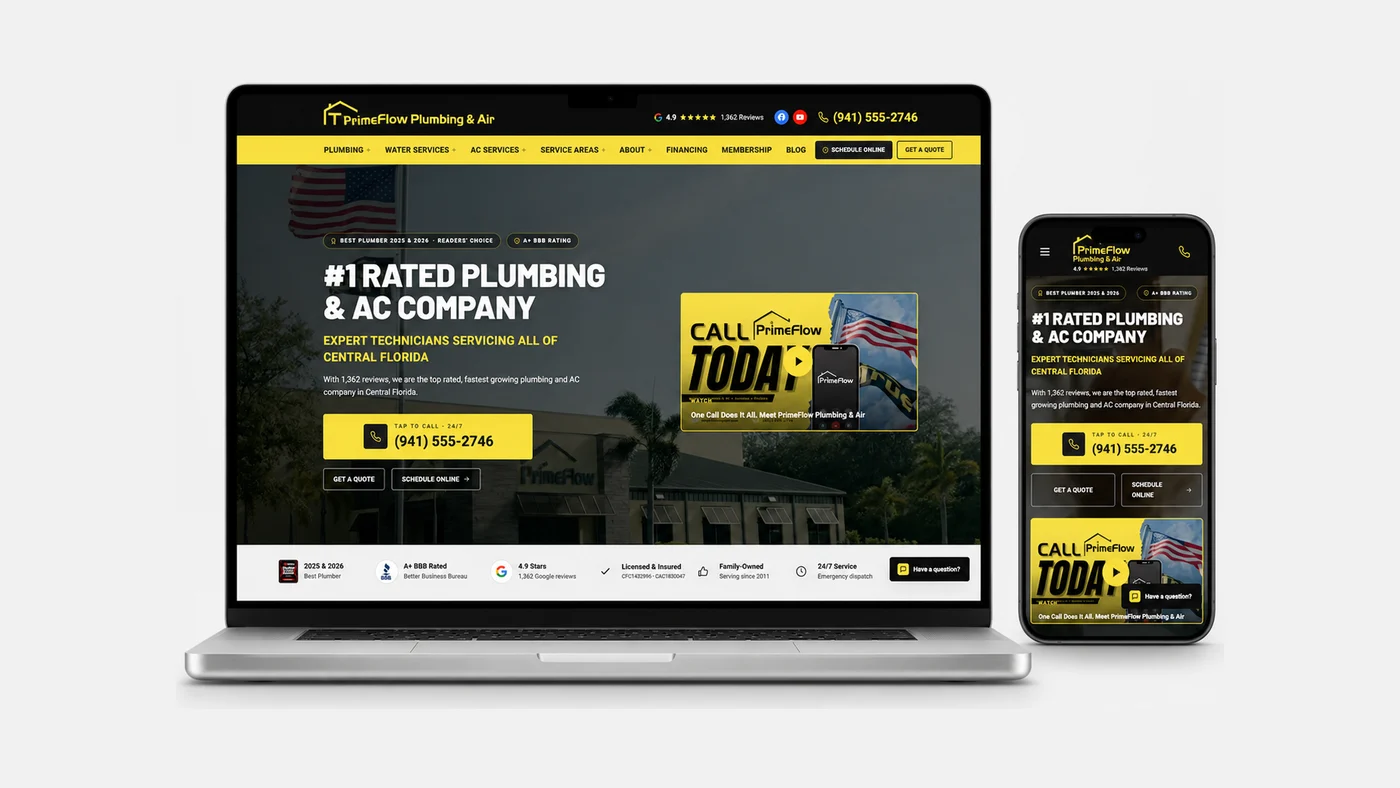
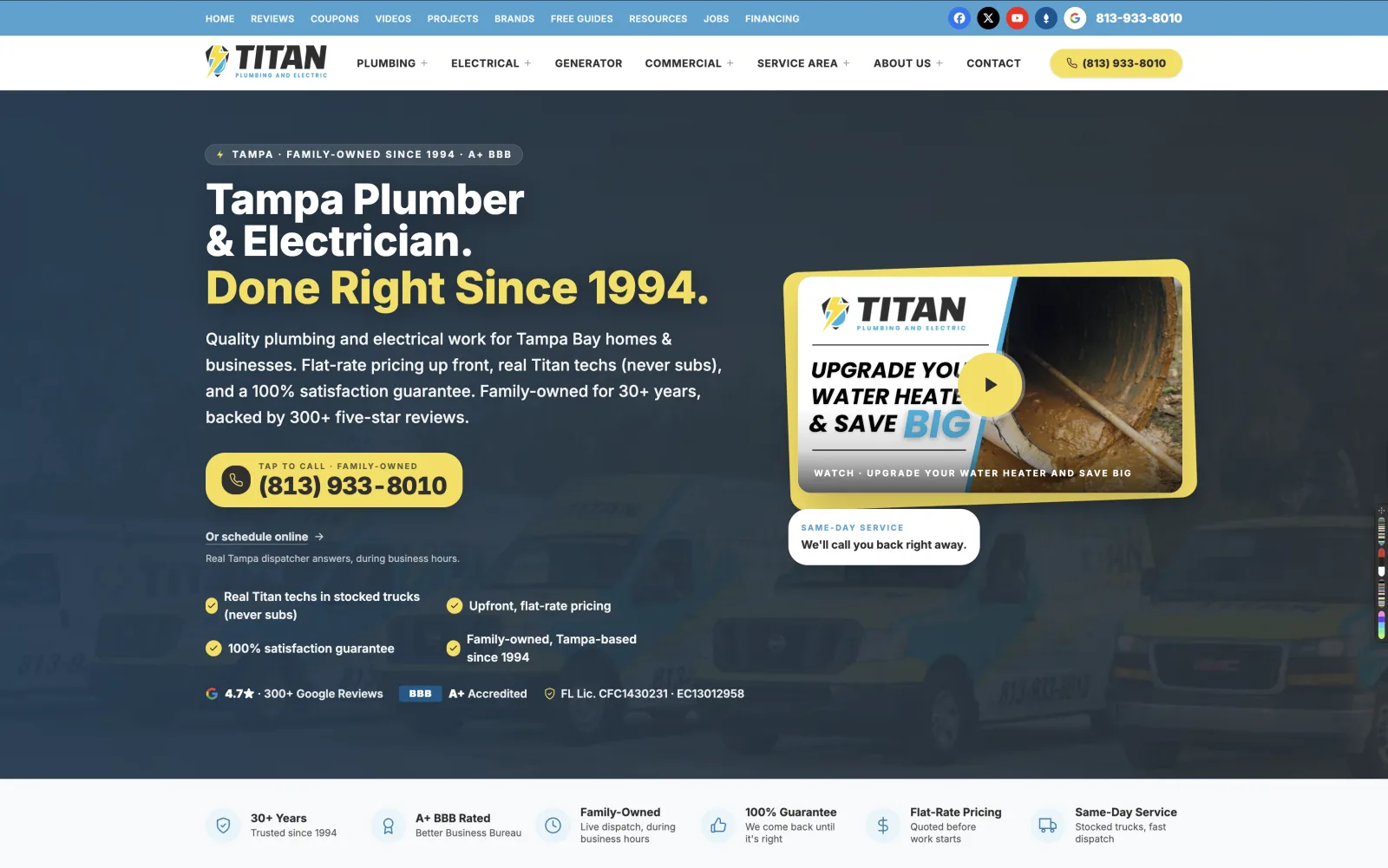
Your website needs to reinforce what the profile is trying to rank for. If your site has one services page, one locations page, and a contact form, you're forcing Google to guess too much. Contractors who consistently rank in Google Maps across larger service areas usually have a tighter local website structure behind the profile.
One generic service page won't cut it
If you serve multiple cities and multiple services, your website needs to reflect that matrix. An HVAC company shouldn't expect one page about "HVAC Services" to rank for AC repair, furnace install, ductless systems, indoor air quality, and emergency service across every suburb.
The Core 30 Method stands out. The method focuses on building hyper-local landing pages across core categories and services, tied together with local optimization and internal linking. According to this breakdown of the Core 30 Method, it has a 90%+ success rate, and one plumbing company moved from #17 to a top-3 position and generated 425 new calls after implementing location-specific service pages with proper on-page SEO and schema.

What this looks like for a contractor
Let's make it practical.
If you're a plumbing company serving one metro and surrounding suburbs, your site structure might include:
- Primary service hubs such as drain cleaning, water heaters, leak detection, sewer repair, emergency plumbing
- City or neighborhood pages tied to those services
- Internal links from main service hubs to local variants
- Clear calls to action that match the profile and phone routing
That means instead of one broad page, you build targeted pages like:
- Drain Cleaning in [City]
- Water Heater Repair in [City]
- Emergency Plumber in [City]
- Sewer Line Repair in [City]
The same pattern applies to HVAC, electrical, and roofing. The point isn't page count for its own sake. The point is specific local relevance.
The page blueprint that actually supports Maps rankings
Every local landing page should do a few things well:
- Target one service and one local area
- Use a title tag and H1 that match the intent
- Include unique copy about that service in that market
- Show supporting trust elements like reviews, project photos, FAQs, and contact options
- Link logically back to the related hub and adjacent service pages
Here's the mistake to avoid. Don't spin near-duplicate city pages with city names swapped out. Thin, repetitive pages don't create authority. They create clutter.
A contractor website should work like a coverage map. Each page strengthens a specific service-area signal and feeds that relevance back into the GBP.
Schema helps Google connect the dots
Schema markup isn't magic, but it's useful because it makes your site easier for Google to interpret.
For local contractors, LocalBusiness schema and service-specific page markup help clarify who you are, where you operate, and what each page represents. This matters when you're trying to connect your website content to the profile and reinforce local search visibility.
I wouldn't lead with schema if your profile and review engine are weak. But once those pieces are moving, schema becomes part of a cleaner technical stack.
A short comparison makes the point:
| Weak setup | Strong setup |
|---|---|
| One broad services page | Dedicated pages for core services and target areas |
| Sparse internal links | Clear silo links from hubs to local service pages |
| Generic copy | Service-specific local copy with unique details |
| No structured data | LocalBusiness and page-level schema support |
| Website disconnected from GBP | Website reinforces profile relevance |
If your current site isn't built for this, get the infrastructure fixed. That might mean new page templates, better internal linking, and ongoing publishing support. For contractors managing that work internally or with a partner, this resource on business website management for service companies is a solid starting point.
Troubleshooting and Your 90-Day Winning Roadmap
The most common complaint I hear is this one. "We're ranking well at the office, but terrible a few miles away."
That's normal in local search. It doesn't mean your campaign is broken. It means you're finally paying attention to how Google Maps really behaves.
Proximity is a dominant factor, and standard rank trackers are misleading because they don't show how rankings shift block by block. Grid tracking tools are essential for seeing those neighborhood-level changes, and service-area businesses can improve visibility without a public storefront by creating virtual proximity through geotagged content and hyper-local citations, based on this analysis of Google Maps proximity behavior.
Why your rank changes across a city
Google doesn't show the same result set to every searcher in the metro.
A homeowner searching from one suburb may see one set of businesses. Someone a few miles away may see another. Zoom level, searcher location, and neighborhood-level competition all affect what appears in the Map Pack.
This is why contractors get fooled when they manually search from the office and think they "ranked." Maybe they do there. That doesn't mean they rank where the better jobs are.
Stop using fake visibility metrics
If you want the truth, track rankings on a grid.
Tools built for local rank grids show where you're strong, where you fade, and where competitors have a pocket of control. That's how you diagnose whether the issue is proximity, weak relevance, poor authority, or just a service-area gap in your website and citation footprint.
Use grid tracking to answer questions like:
- Which neighborhoods show top visibility
- Where you drop outside the top results
- Which service pages align with stronger map visibility
- Whether one competitor dominates a specific zone
- How far your influence extends from your base location
If you don't track rankings block by block, you're making lead generation decisions with bad field data.
The 90-day sprint that contractors should actually run
This is the roadmap I recommend for a serious push to rank in Google Maps.
Days 1 through 30
Focus on cleanup and alignment.
- Claim, verify, and fully optimize the GBP
- Fix categories, services, attributes, hours, and description
- Audit citations and correct inconsistent business data
- Set up review request automation
- Start collecting fresh jobsite photos
- Establish a weekly GBP posting schedule
- Run a baseline rank grid across your target service area
At this stage, don't chase vanity metrics. You're building the operating system.
Days 31 through 60
Push authority and activity.
- Maintain steady review flow
- Respond to every review quickly
- Continue citation cleanup and add relevant local listings
- Post to GBP every week
- Upload geotagged photos consistently
- Seed and answer Q&A
- Build or improve local service pages on the website
- Compare your rank grid against your top competitors
Momentum usually starts to show. Rankings often move unevenly at first. That's fine. Local search expands by pocket, not always all at once.
Days 61 through 90
Expand coverage and tighten weak zones.
- Launch more hyper-local service pages
- Improve internal links between hubs and city pages
- Refine underperforming profile sections
- Identify neighborhoods where proximity is the main obstacle
- Strengthen virtual proximity with local content and citations
- Review call, direction, and lead quality trends
- Re-run the grid and map gains by service and geography
By the end of this sprint, you should know three things with clarity. Where you rank well. Where you don't. And which operational lever changed the map.
What to do if you're a service-area business
Service-area businesses have it harder because they don't always benefit from a visible address. But they aren't locked out.
The fix is discipline. Build stronger location relevance through your website. Publish local proof through photos and content. Keep citations clean. Maintain activity. Track neighborhoods separately instead of treating the metro like one uniform market.
Many HVAC, plumbing, and electrical companies frequently fail because they claim one city, add a long list of service areas in GBP, and expect coverage to appear automatically. It won't. Google still wants evidence of local relevance.
The blunt truth about ranking in Google Maps
There is no single trick.
No secret category hack. No magic review number. No software toggle. Contractors who win the Map Pack usually do boring things with more discipline than everyone else. They finish the profile. They collect reviews steadily. They publish real activity. They build the right local pages. They track neighborhoods instead of guessing.
That is how you take control of local lead flow. Not by hoping Google notices you. By giving Google enough clear evidence that your company should be shown to the next homeowner who searches.
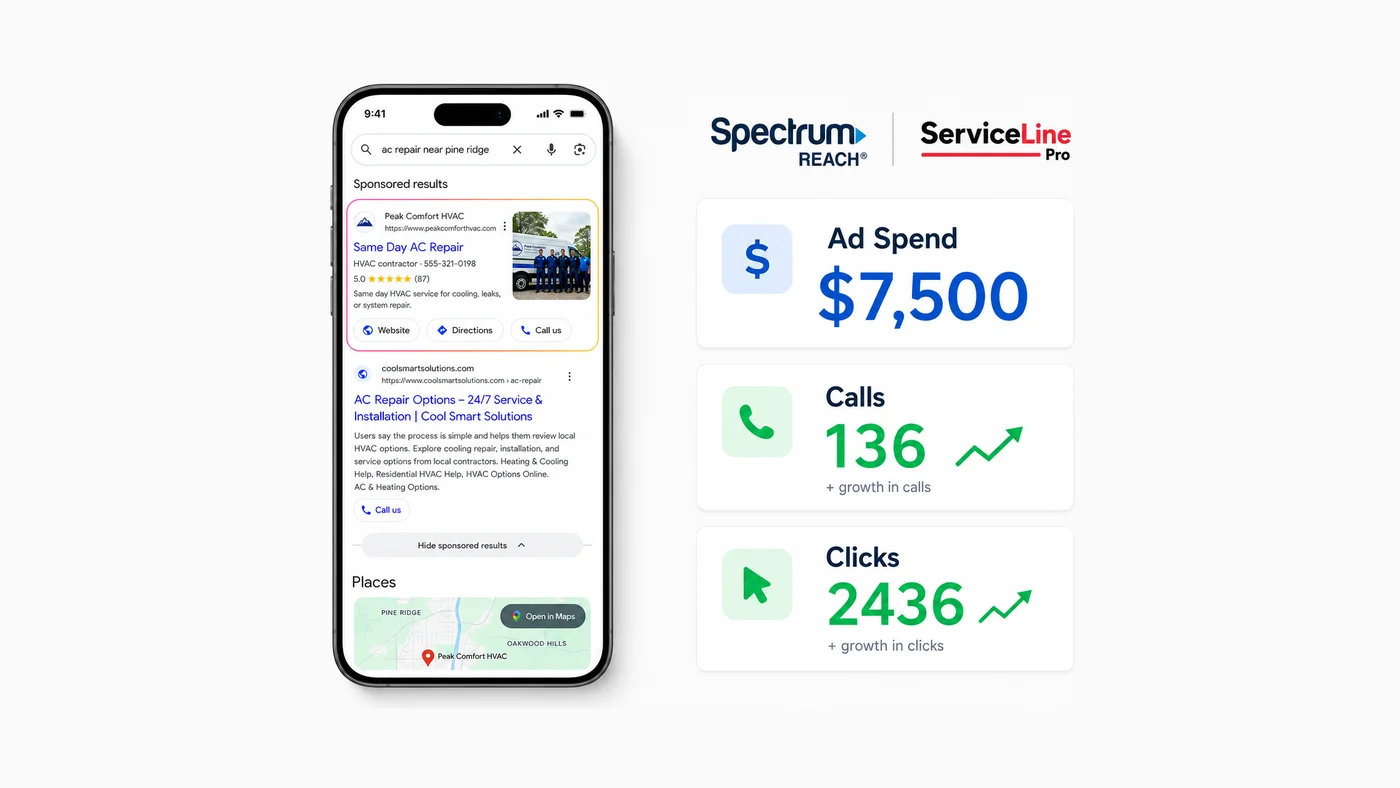
If you want help executing this without burning internal time, ServiceLine Pro works specifically with home service contractors on Local SEO and Google Ads, including Google Business Profile setup, local ranking campaigns, citation work, custom landing pages, and lead tracking. If your goal is predictable Map Pack visibility and cleaner lead flow, book a strategy call and get a real audit before you spend another month guessing.